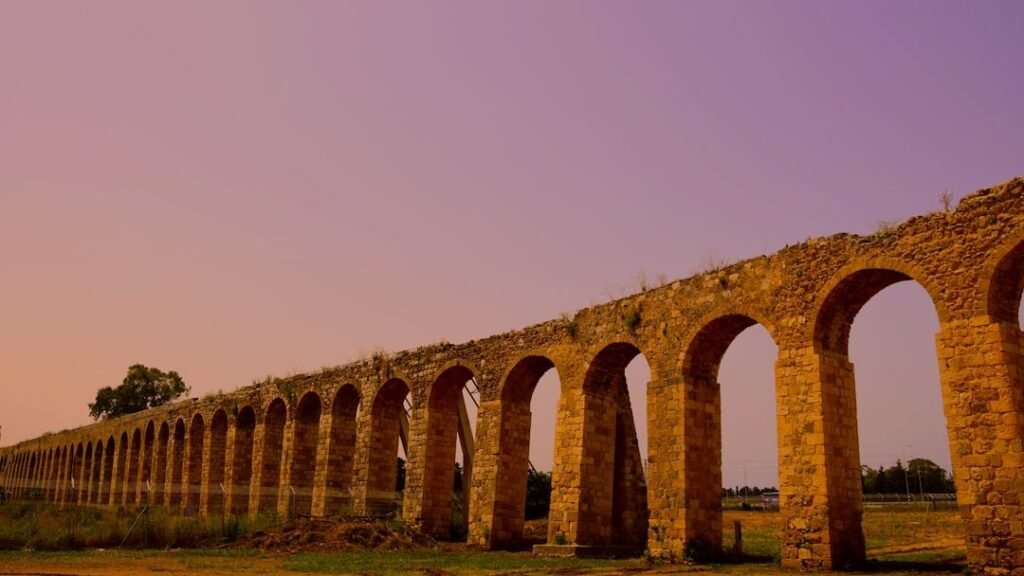

You would think that in 2026, with all our satellites, AI models, laser scanning technology, and centuries of accumulated scientific knowledge, we would have figured out how ancient people built their most astonishing structures. Spoiler: we really haven’t. Not completely.
There is something almost humbling about standing at the foot of a monument thousands of years old and realizing that the people who built it, without computers or cranes or even basic machinery as we know it, somehow pulled off something that leaves modern engineers scratching their heads. The ancient world was, in many ways, far more sophisticated than the history books have given it credit for.
These ten engineering achievements span continents and millennia. Some have been partially explained. Others remain stubbornly, gloriously mysterious. Let’s dive in.
1. The Great Pyramid of Giza: A Monument That Refuses to Give Up Its Secrets
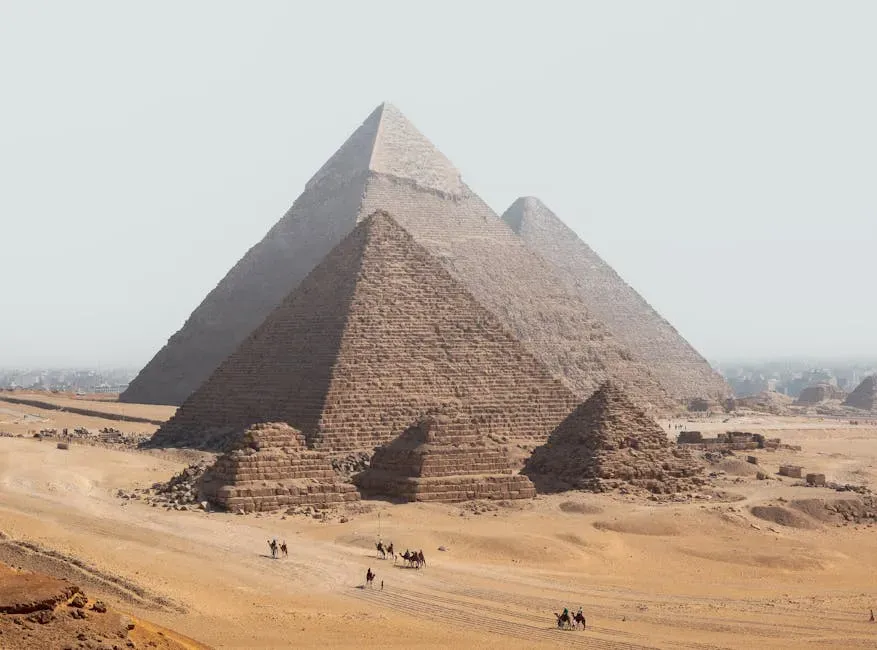
Here’s a number that should make your jaw drop: the Great Pyramid was built by quarrying an estimated 2.3 million large blocks, weighing 6 million tonnes in total. Now imagine doing that without a single wheel-based cart in use on construction sites, without steel tools, and without any of the engineering software we take for granted today. Initially standing at 146.6 metres, the Great Pyramid was the world’s tallest human-made structure for more than 3,800 years. That is not an accident. That is mastery.
The logistics of moving those stones have baffled researchers for generations, but a 2024 discovery offered a tantalizing piece of the puzzle. Scientists discovered a long-buried branch of the Nile river that once flowed alongside more than 30 pyramids in Egypt, potentially solving the mystery of how ancient Egyptians transported the massive stone blocks. The 64-kilometre-long river branch was hidden under desert and farmland for millennia. Yet even with that revelation, the Giza pyramids continue to fascinate and even surprise archaeologists, with new discoveries still being made that hint at hidden entranceways and unexplained voids within the giant tombs. Even now, we are still finding new chambers inside these ancient giants.
2. Göbekli Tepe: The Temple That Rewrote Human History
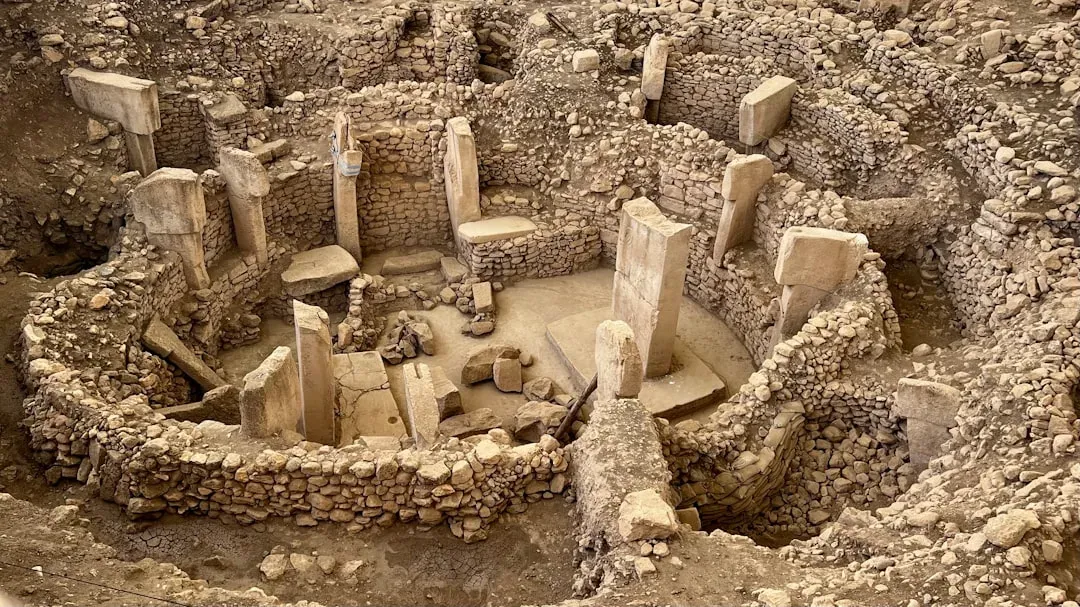
If you want a single discovery that completely upended how scientists understand early civilization, look no further than Göbekli Tepe in southeastern Turkey. Radiocarbon dating has revealed that Göbekli Tepe was built around 9600 BCE, making it over 11,000 years old, positioning it as the oldest known temple complex on Earth. To put that in perspective, it predates Stonehenge by over 6,000 years and the invention of agriculture itself. Let that sink in for a moment.
The engineering challenge here is mind-boggling. Building Göbekli Tepe took immense effort, as hunters quarried and hauled 16-ton pillars from bedrock 330 feet away, then raised them into pits without wheels or beasts. Between 9600 and 7000 BC, they shaped over 200 pillars across decades, carving animal reliefs with precision. Göbekli Tepe suggests that the urge to worship at these monumental structures brought people together, which then necessitated the invention of farming to feed the workforce. In other words, religion may have come before agriculture. That flips the entire story of human civilization on its head.
3. Stonehenge: More Than Just a Circle of Rocks
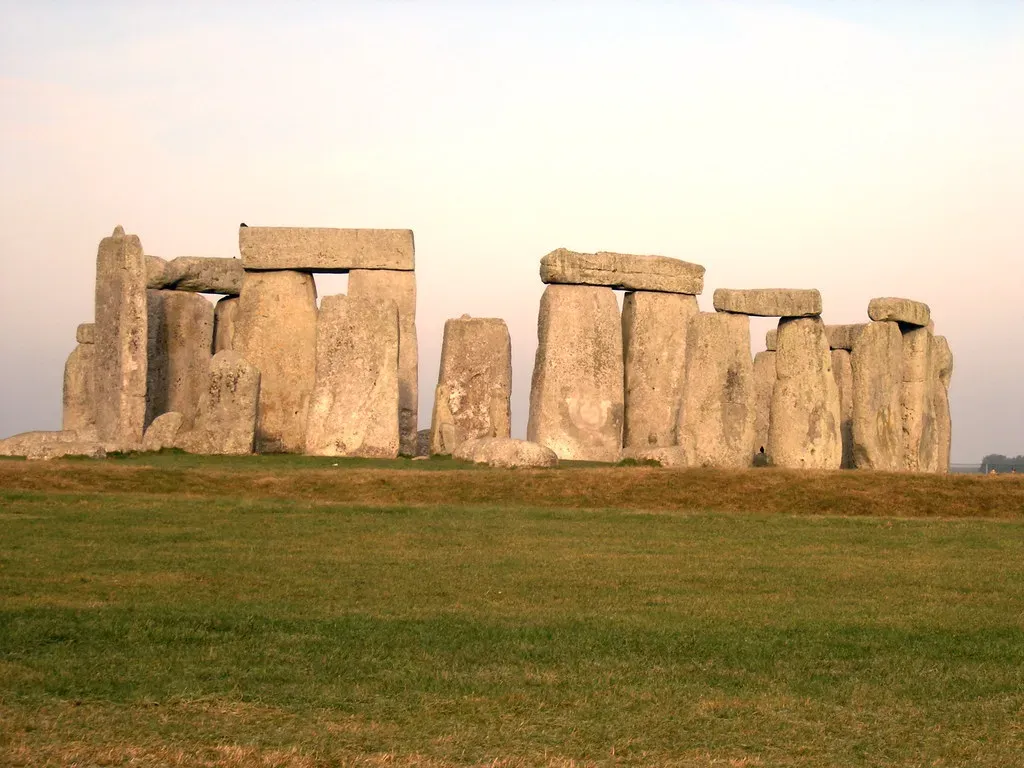
Honestly, Stonehenge gets a bit of a reputation as that British thing tourists photograph. But the actual engineering story behind it is genuinely shocking. Built between 3000 BC and 2000 BC on the Salisbury Plain in Wiltshire, the monument consists of a ring of standing stones, each around 13 feet high and weighing close to 25 tons. Moving those stones was only half the challenge. The smaller bluestones were transported from the Preseli Hills in Wales, over 150 miles away, likely using sledges and rafts. One hundred and fifty miles. With stones weighing up to 25 tons. Without a wheel.
Organizing large seasonal gatherings, feeding workers, and enforcing a shared design without written plans demands a level of coordination that many small-scale societies simply cannot sustain. Stonehenge reads today like an abandoned research station: highly purposeful, precisely tuned to celestial cycles, and stubbornly silent about why and how it was made in exactly this way. Even with all our LIDAR scanning and radiocarbon analysis, the full story of who built it and precisely why remains tantalizingly out of reach.
4. The Antikythera Mechanism: An Ancient Computer, Literally
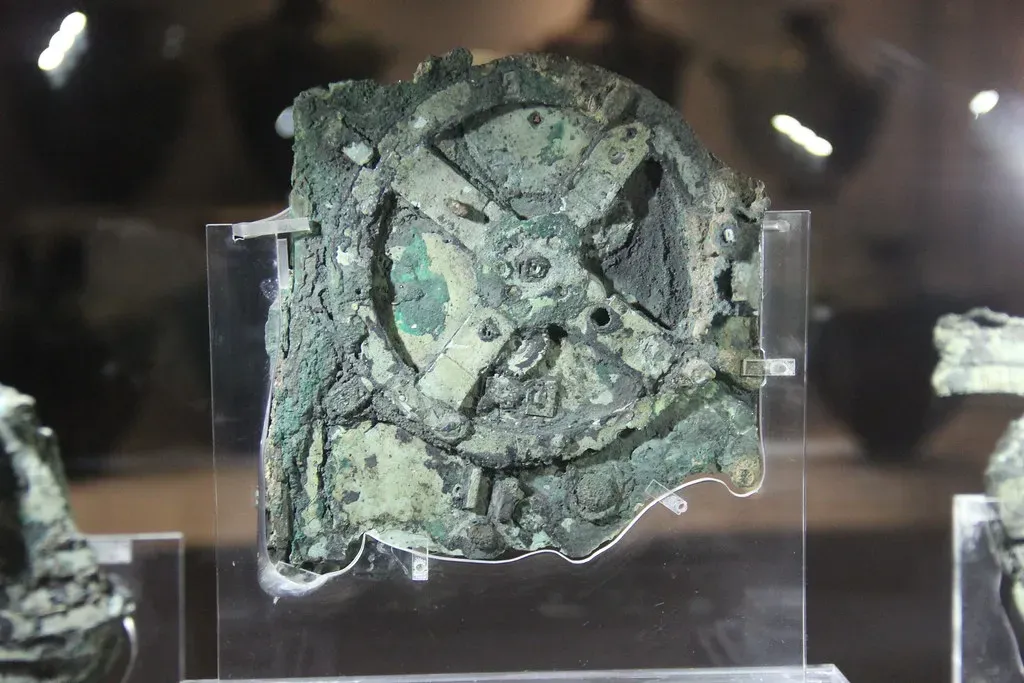
Imagine you are a diver exploring a 2,000-year-old shipwreck off the coast of Greece. You haul up what looks like a corroded lump of bronze. That lump, it turns out, is arguably the most astonishing object ever recovered from the ancient world. Discovered in a shipwreck off the Greek island of Antikythera in 1901, this device dates back to approximately 100 BCE and represents an astronomical calculator of extraordinary complexity. The mechanism contains at least 30 meshing bronze gears that could predict eclipses, track the Olympic Games cycle, and model the irregular orbit of the Moon.
Here is what makes the Antikythera Mechanism so perplexing to modern scientists: it should not exist. Not yet. What truly amazes researchers is how advanced this technology was for its time. Nothing remotely similar appears in historical records for another thousand years, making it a true technological anomaly. Either way, the Antikythera mechanism forces scientists to confront gaps in the story of technological evolution, suggesting that some lines of innovation may surge forward, flourish briefly, and then disappear, waiting to be rediscovered centuries later. It is like finding a working smartphone in a medieval castle.
5. Roman Concrete: The Building Material That Gets Stronger With Age

Here’s the thing about modern concrete. It is everywhere, it holds up skyscrapers, and it starts crumbling within decades when exposed to seawater. Ancient Romans built harbor structures 2,000 years ago that are not only still standing but are actually stronger now than when they were first made. That is not an exaggeration. Researchers at the University of Utah discovered that as seawater filters through piers and breakwaters made of age-old Roman concrete, the structures actually become increasingly stronger because of the growth of interlocking minerals.
The secret turned out to be a clever mix of volcanic ash, lime, and seawater. The strength and longevity of Roman concrete is understood to benefit from a reaction of seawater with a mixture of volcanic ash and quicklime to create a rare crystal called tobermorite, which may resist fracturing. As seawater percolated within the tiny cracks in the Roman concrete, it reacted with phillipsite naturally found in the volcanic rock and created aluminous tobermorite crystals. The result is a candidate for “the most durable building material in human history.” In contrast, modern concrete exposed to saltwater deteriorates within decades. We still cannot fully replicate it.
6. Sacsayhuamán: The Inca Stonework That Defies Logic
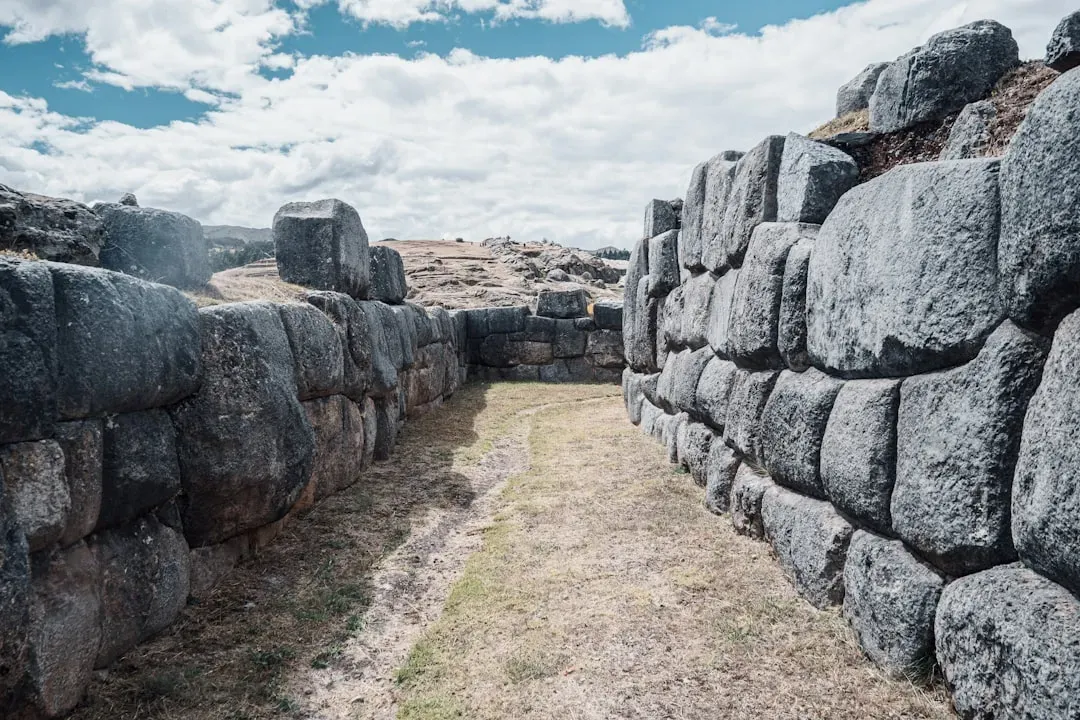
Outside the city of Cusco in Peru, there is a massive stone fortress whose construction method remains one of the most stubborn engineering mysteries on earth. Incan stonework at Sacsayhuamán features massive stones weighing hundreds of tons fitted together so precisely that a knife blade cannot fit between them, all accomplished without mortar. These irregular, multi-sided blocks interlock in complex three-dimensional patterns that have survived numerous earthquakes that destroyed later Spanish colonial buildings.
Let that last point hit you properly. The earthquakes that toppled Spanish-built colonial structures left the Inca walls standing. The Incas achieved this without iron tools, using only stone hammers and bronze implements. Modern engineers cannot fully explain how these stones were shaped to achieve such precise fits, especially given the complex angles involved. The Incas managed to build these structures using boulders up to 120 tons in size. No one knows how they moved them from a quarry 3 km away to the site, and even more perplexing is how flawlessly they fit together. No mortar, no iron tools, and somehow zero gaps.
7. The Nazca Lines: Giant Drawings No One Was Supposed to See From the Ground
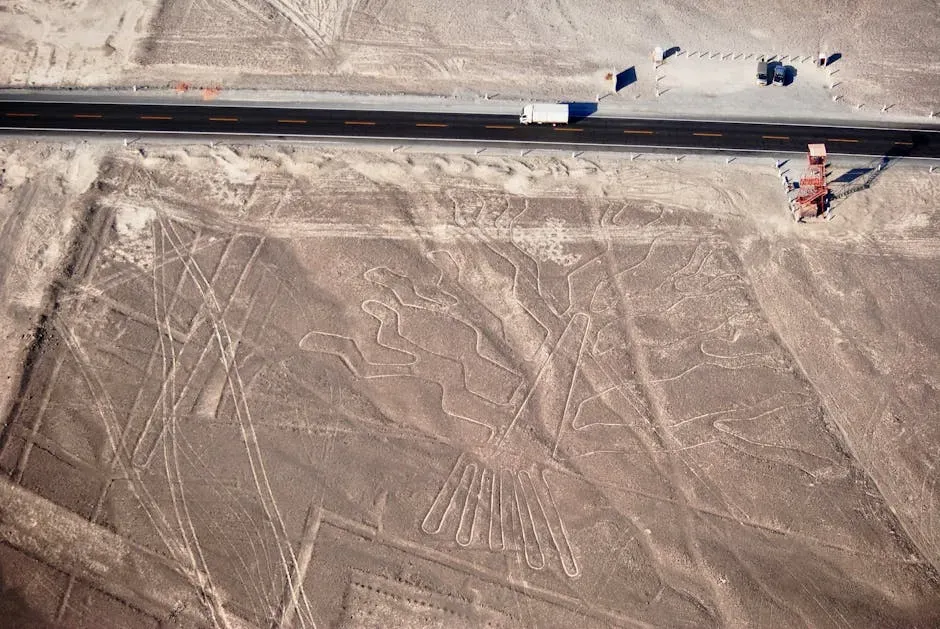
Etched into a remote Peruvian desert plateau are hundreds of enormous designs, some stretching over a thousand feet across, depicting animals, plants, geometric shapes, and perfectly straight lines running for miles. Etched into the arid desert floor of southern Peru, the Nazca Lines were created between 500 BC and 500 AD. There are over 800 straight lines, 300 geometric figures, and 70 animal and plant designs, including a hummingbird, spider, and monkey. The kicker? You can only really appreciate them from the air.
Because they are so vast, some measuring up to 1,200 feet across, they can only be fully appreciated from the air, leading to wild theories about alien runways. Set those alien theories aside, though. The more grounded explanations are fascinating enough. Archaeologists like Maria Reiche spent decades studying the lines, proposing they served as an astronomical calendar. More recent research suggests they were part of elaborate rituals to summon water from the gods, a critical resource in one of the driest places on Earth. The precision of those straight lines, drawn without aerial perspective, without GPS, without anything remotely modern, is genuinely difficult to explain even today.
8. The Leshan Giant Buddha: A Hidden Engineering Marvel
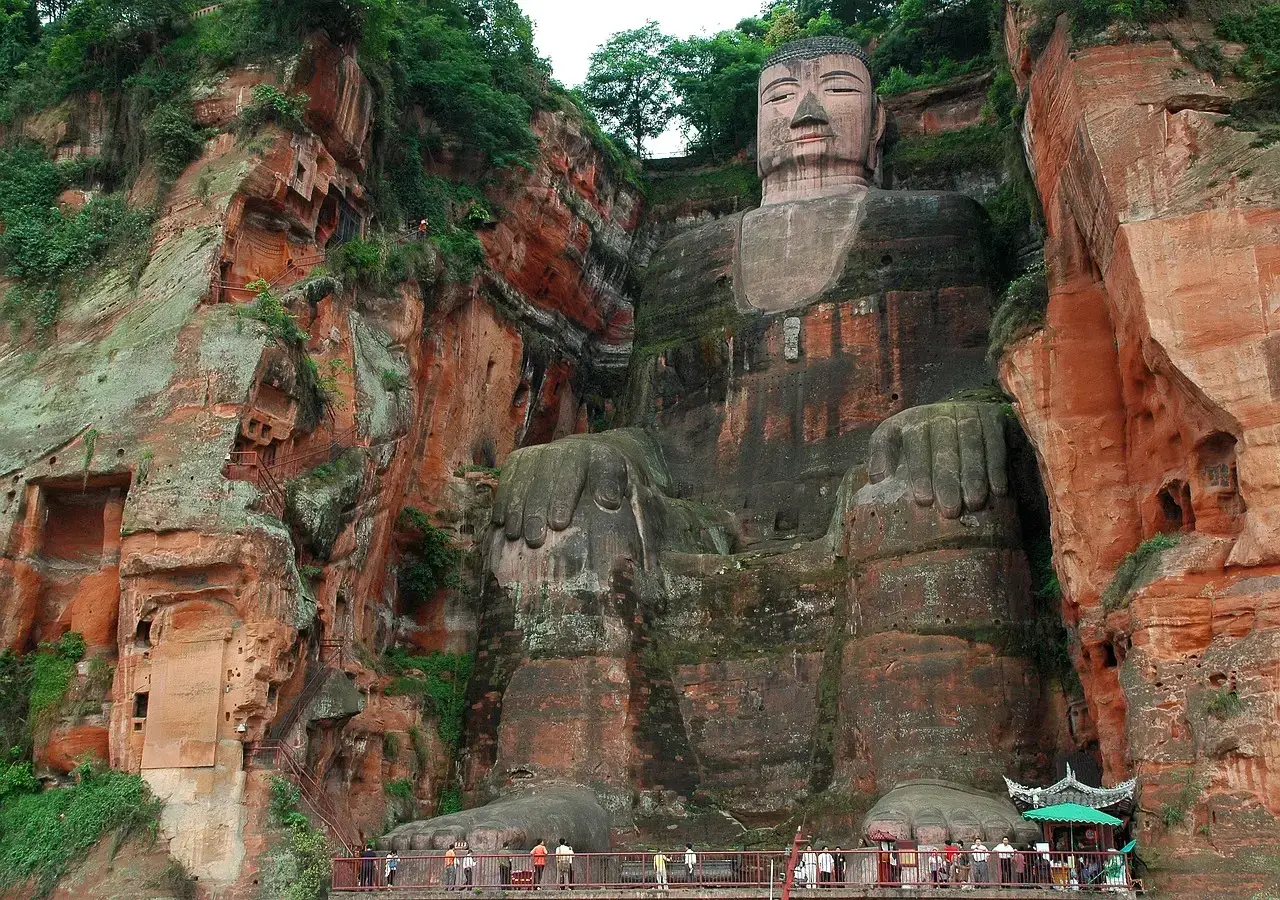
Carved directly into the face of a red sandstone cliff in China’s Sichuan province, the Leshan Giant Buddha is the largest stone Buddha on Earth. Measuring 232 feet tall with 92-foot wide shoulders, this Buddha statue was completed in 803 CE and it is quite imposing even by today’s standards. Sculpting something that large from solid rock, over more than 90 years of labor, would be an extraordinary feat in any era.
What surprises modern engineers most, though, is what you cannot see. The statue features 1,021 intricately coiled buns that have been carefully integrated into its head, acting as a hidden drainage system that allows rainwater to flow to the ground without damaging the statue. The drainage system also runs through other parts of the statue including its ears and arms. Think about that. Ancient Chinese engineers not only carved this colossal figure, they also built a fully functional, concealed water management system into its design. The whole thing has stood for over twelve centuries with remarkably minimal erosion. That is not luck. That is genius.
9. Mohenjo-Daro: A 4,500-Year-Old City With Modern Urban Planning
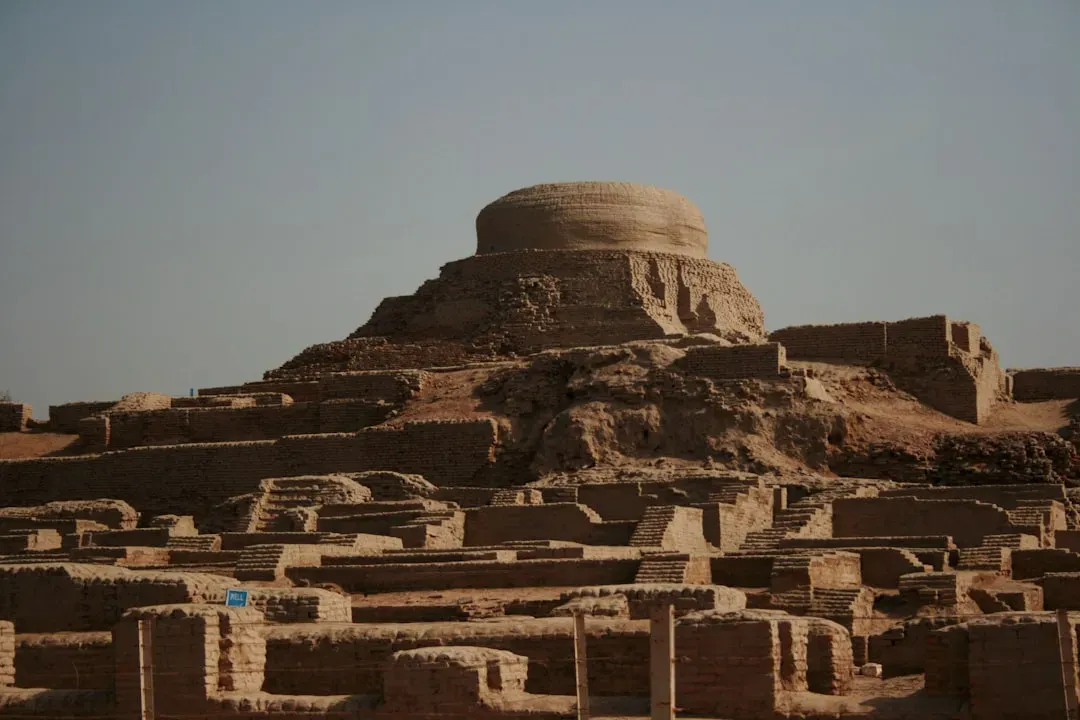
Most people, if asked to name the world’s first truly planned cities, would probably think of ancient Rome or classical Greece. They would be off by thousands of years. The lost city of Mohenjo-Daro in Pakistan is over 4,500 years old and contained a complex water and sewage system on a grid plan. It housed up to 35,000 people and contained a complex water and sewage system. That is a functional sewer grid running beneath a city that predates the Roman Empire by over 2,000 years.
The engineering sophistication here is startling even by modern standards. The city featured standardized brick sizes, multi-story buildings, dedicated bathing areas, and refuse chutes built directly into the walls of homes. Ancient Mesopotamia left some of the most remarkable engineering of its era, showcased in the Great Bath. This rectangular bath, likely used for special occasions and ceremonies, measured 38 feet long, 22 feet wide, and up to eight feet deep. Baked bricks were used with a natural tar material to keep it watertight. An adjacent well provided water and there was also an established drainage outlet. A waterproof public bath with drainage, built in 2500 BCE. It’s hard to say for sure, but that kind of civic planning genuinely rivals what many cities achieved thousands of years later.
10. Damascus Steel: The Lost Blade Technology No One Can Replicate

For centuries, Damascus steel was the most feared and coveted blade material in the world. Warriors and kings paid fortunes for swords forged from it. These blades could slice through a falling silk scarf yet withstand the hardest battle without breaking, combining flexibility with incredible strength. Craftsmen created this legendary metal using wootz steel ingots imported from India, forging them using techniques passed down through generations. The resulting blades displayed beautiful wavy patterns that looked almost like flowing water.
Then, inexplicably, the knowledge vanished. By the 1700s, the knowledge of making true Damascus steel disappeared completely. Modern metallurgists have studied surviving blades for decades and have discovered that the secret likely involved carbon nanotubes and carbide nanowires inside the steel structure, materials that were not understood scientifically until the 20th century. Whether through lost documentation, disrupted cultural transmission, or techniques so specialized they failed to spread widely, these technological achievements remind us that progress is not always linear. Studying these ancient mysteries not only helps us appreciate the accomplishments of our ancestors but may also provide solutions to contemporary challenges, from creating more sustainable building materials to developing new approaches to metallurgy and engineering. Ancient bladesmiths were essentially working with nanotechnology, centuries before the word existed.
Conclusion: The Ancient World Was Smarter Than We Thought
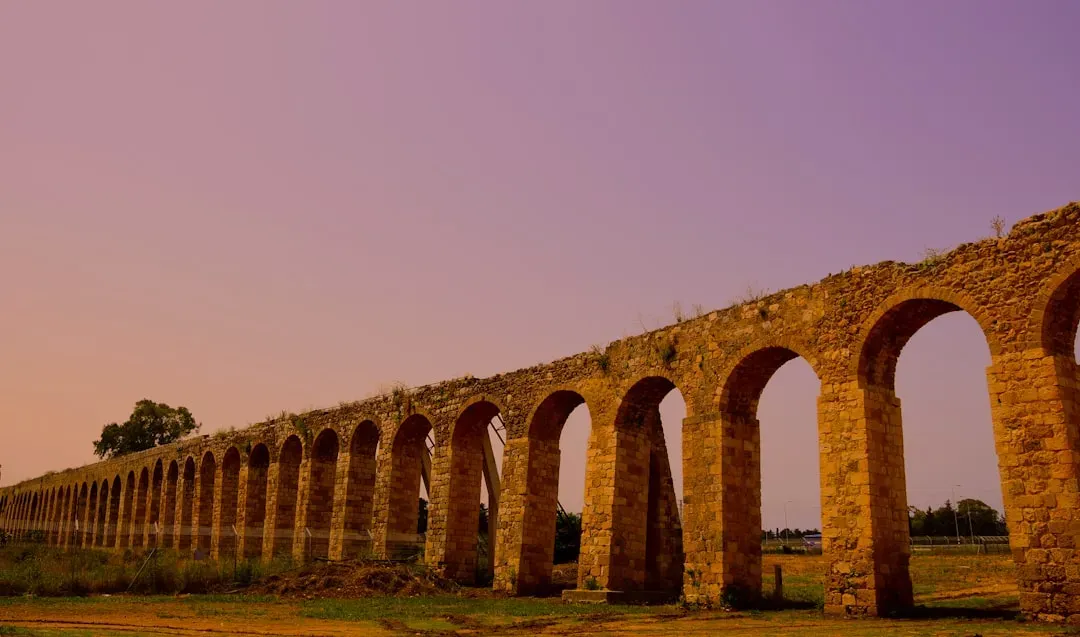
Looking at all ten of these engineering achievements together, one thing becomes undeniably clear. Long before computer models and laser-guided instruments, ancient builders were moving stones the size of houses, carving rock with surgical precision, and aligning structures with the sky so accurately that modern engineers still double-check the math. These were not lucky accidents or the work of mysterious supernatural forces. These were the results of deep intelligence, generational knowledge, sophisticated organization, and a problem-solving creativity that frankly puts some modern thinking to shame.
These feats reveal that humans have been solving large-scale engineering and organizational challenges far longer, and often more creatively, than standard timelines admit. These ancient engineering feats are not just tourist attractions; they are technical case studies that refuse to fully add up. As we revisit them with drones, LIDAR, and machine learning, the story of human ingenuity keeps getting stranger and far more impressive. Perhaps the most fascinating part of all is that new discoveries are still being made. Every scan, every excavation, every pollen sample from a dried-up riverbed adds another piece to a puzzle that has been waiting thousands of years to be solved.
Which of these blew your mind the most? If you had to guess which one science will finally crack next, what would it be? Tell us in the comments.