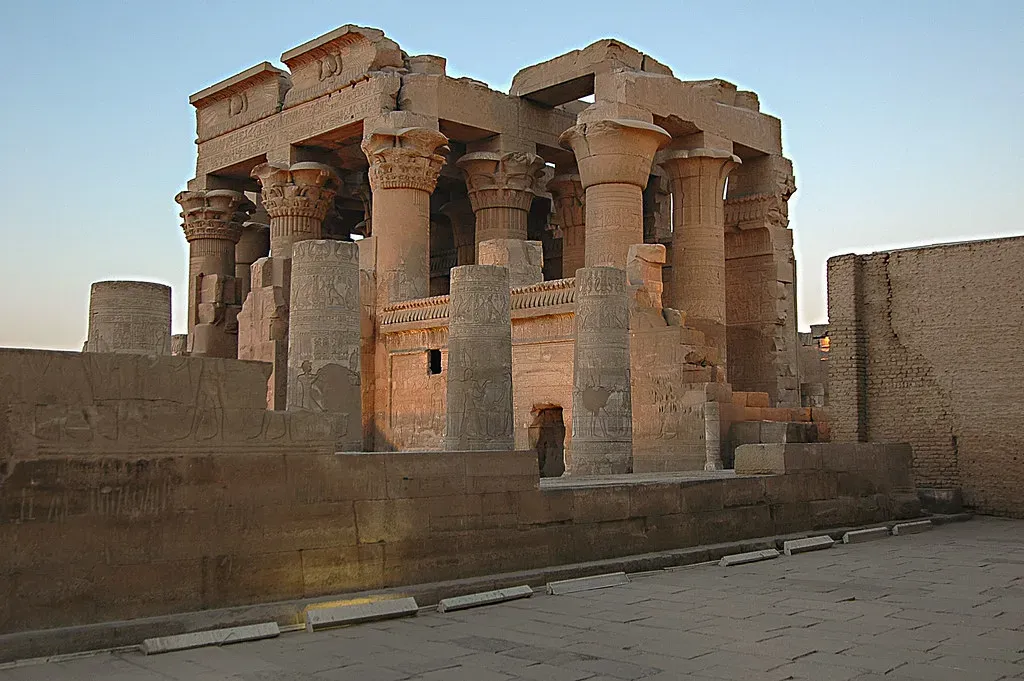

There’s something almost unsettling about standing in front of a structure built thousands of years ago and realizing you have absolutely no idea how it was done. Not in a vague, hand-wavy way. In a deeply humbling, technically specific way. Modern architects and engineers, armed with laser-guided instruments, computational design software, and centuries of accumulated knowledge, still find themselves stumped by what ancient builders achieved with copper chisels, wooden levers, and raw human ingenuity.
Honestly, it makes you wonder what we’re really missing. These weren’t primitive people making lucky guesses. They were sophisticated problem-solvers who built in ways that, in some cases, we genuinely cannot replicate today. So let’s take a closer look at ten ancient engineering feats that continue to leave the modern architectural world utterly speechless.
1. The Great Pyramid of Giza: A Math Problem in Stone

You think you know the Great Pyramid. You’ve seen it in textbooks, on television, and probably in someone’s living room mural. It demonstrates precise dimensions and unparalleled scale in ancient engineering, originally standing 146.6 meters, roughly 481 feet, high. But the number that really stops modern engineers cold isn’t the height. It was constructed from an estimated 2.3 million limestone and granite blocks each weighing between 2.5 and 15 tons, and what astounds modern engineers and archaeologists is the accuracy: the sides differ in length by mere centimeters, and the pyramid’s orientation to true north is almost exact.
The Great Pyramid is aligned to true north with extraordinary precision, deviating by only a fraction of a degree. Unlike magnetic north, which shifts over time, true north is a fixed geographical point. Achieving such alignment without modern compasses, satellites, or digital instruments continues to astonish researchers. Think about that for a moment. Egyptian engineers would have tracked the path of stars across the sky and then bisected the arcs to find true north to align the foundation. No GPS. No digital theodolite. Just brilliant minds reading the sky. Even with all our tools, replicating that accuracy today would be considered remarkable.
2. Roman Concrete: The Self-Healing Material That Put Modern Cement to Shame
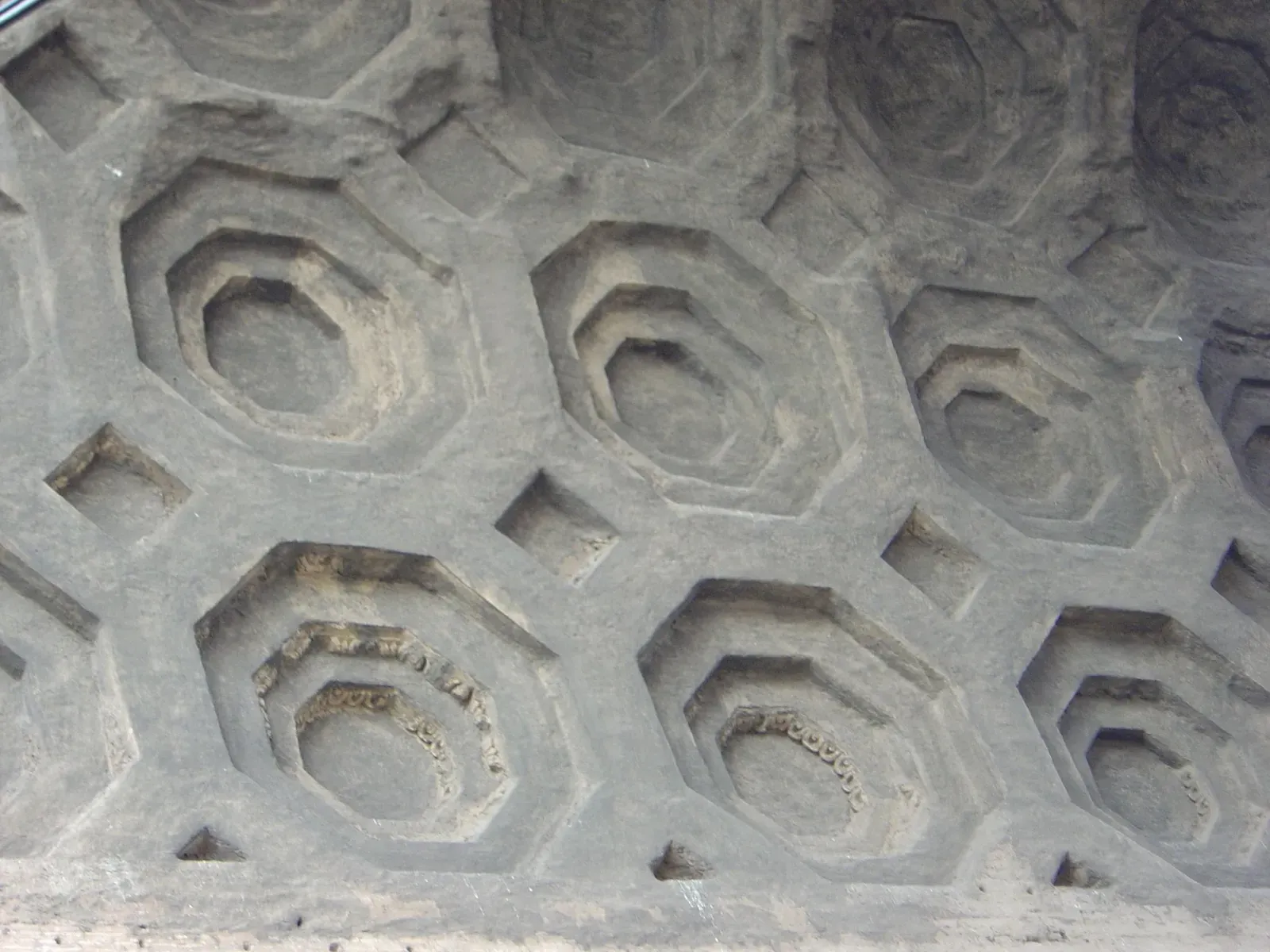
Here’s the thing about Roman concrete that should honestly embarrass every modern civil engineer a little. Rome’s famed Pantheon, which has the world’s largest unreinforced concrete dome and was dedicated in 128 C.E., is still intact, and some ancient Roman aqueducts still deliver water to Rome today. Meanwhile, many modern concrete structures have crumbled after a few decades. Decades versus millennia. That is not a small gap. Ancient Rome’s magnificent feats of engineering would not have been possible without opus caementicium, Roman concrete. This unique mix of sand, lime, and volcanic ash is so strong and durable that it has barely started to decompose over 2,000 years.
What makes this even more fascinating is a discovery confirmed in 2023. Research found that lime clasts, previously considered a sign of poor aggregation technique, react with water seeping into any cracks. This produces reactive calcium, which allows new calcium carbonate crystals to form and reseal the cracks. The concrete essentially heals itself. Researchers at the University of Utah discovered that as seawater filters through piers and breakwaters made of age-old Roman concrete, the structures actually become increasingly stronger because of the growth of interlocking minerals. This is pretty much the opposite of what happens to modern concrete structures, which are worn down by the elements and become increasingly cracked and brittle. You couldn’t engineer something more counterintuitive if you tried.
3. The Roman Colosseum: A Stadium Blueprint 2,000 Years Ahead of Its Time
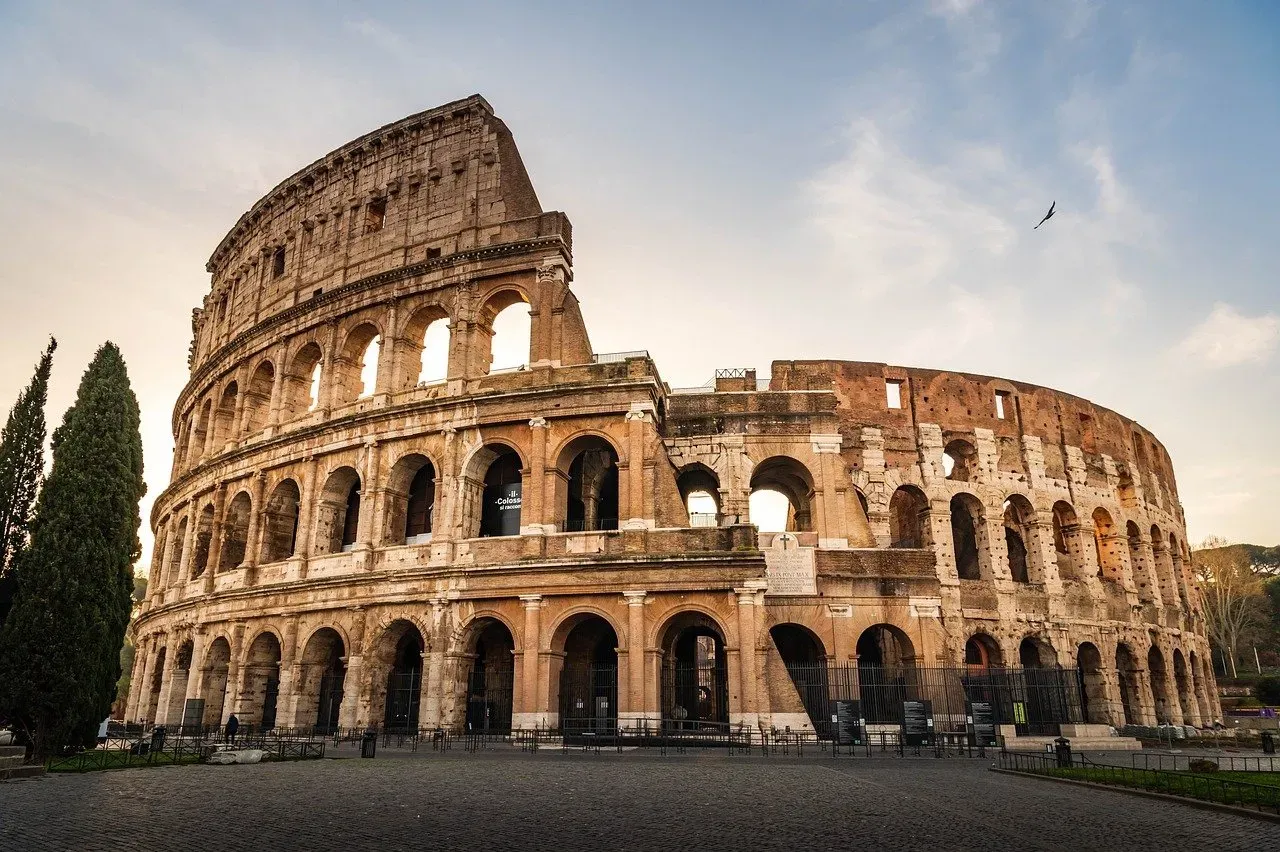
Completed in 80 AD under Emperor Vespasian and his son Titus, this massive amphitheater could accommodate an estimated 50,000 to 80,000 spectators, making it the largest of its kind in ancient Rome. It was designed to host gladiatorial contests, animal hunts, and public spectacles. But here’s what really gets architects talking: it wasn’t just large. It was intelligently large. The Colosseum’s design prioritized spectator safety and efficient crowd movement through innovative architectural solutions. The 80 numbered entrances at ground level were precisely calculated to handle crowd flows of unprecedented size. Each entrance served specific seating sections, reducing congestion while ensuring social segregation according to Roman class distinctions. The vomitoria, corridors that allowed rapid crowd dispersal, were dimensioned to empty the entire amphitheater in approximately 15 minutes.
Fifteen minutes to evacuate nearly 80,000 people. Many modern sports venues still can’t match that. Modern stadium design owes an enormous debt to Colosseum innovations: elliptical seating arrangements for optimal sightlines, radial circulation systems for crowd management, and structural systems that create large open spaces without intermediate supports. Contemporary architects studying the Colosseum have rediscovered principles of crowd psychology, acoustic design, and environmental control that ancient Roman engineers understood intuitively. Let that sink in. We’re still rediscovering what they knew intuitively.
4. The Pantheon Dome: The Unreinforced Concrete Record That Still Stands

The Pantheon Dome is one of the most famous structures built from ancient Roman concrete that can be seen in person today. The dome was completed around 127 CE during the reign of Emperor Hadrian. It was designed as a temple for the Roman gods. The architectural marvel of this structure is the 142.4-foot diameter domed ceiling. At the time of construction, it was the largest dome built. Nearly two thousand years later, it remains the world’s largest unreinforced concrete dome. No steel. No modern framework. Just carefully engineered ancient concrete, still standing without a structural engineer’s intervention. The aggregates used in the concrete became lighter as the dome was constructed towards the middle. This allowed the middle of the dome to be less dense, thus putting less stress on the dome itself.
Before the Romans perfected dome-building, even the best architects had to deal with the problem of a heavy stone roof, forcing them to crowd the floors of temples and public buildings with columns and load-bearing walls. The Pantheon shattered that problem entirely. Roman domes were spacious, open and created a real sense of interior space for the first time in history. Stemming from the realization that the principles of the arch could be rotated into three dimensions to create a shape that had the same supportive power but an even larger area, dome technology was mostly due to the availability of concrete. A conceptual leap so elegant it still defines architectural thinking today.
5. Machu Picchu: Earthquake-Proof Architecture Without a Single Bolt
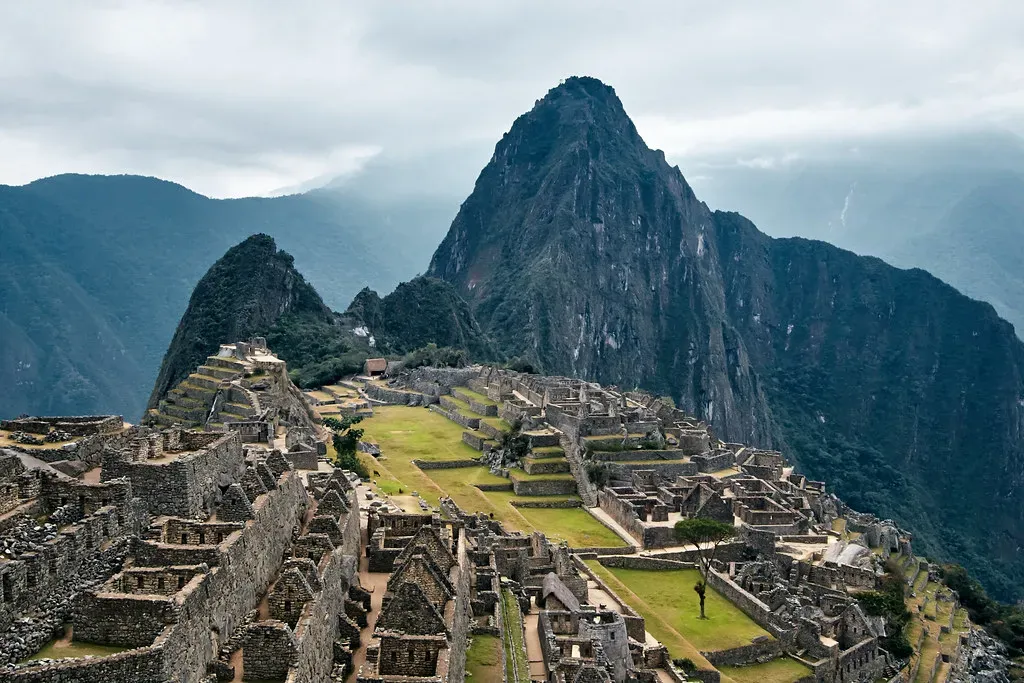
High in the Peruvian Andes, where engineering logic seems to defy possibility, Machu Picchu stands as one of humanity’s greatest architectural achievements. Built around 1450 AD without iron tools, wheeled vehicles, or written blueprints, this Lost City of the Incas demonstrates engineering sophistication that continues to baffle modern architects and engineers. The site sits at over 2,400 meters above sea level, perched on a mountain ridge in one of the world’s most seismically active zones. You’d expect ruins. What you get instead is perfection. The most striking feature of Machu Picchu’s architecture is the precision of its ashlar masonry, where massive stone blocks fit together so perfectly that not even a knife blade can slide between them. This technique involves cutting stones to exact specifications without mortar, creating walls that have survived centuries of earthquakes and weather.
The walls consist of thousands of interlocking blocks with irregular shapes, and it’s suggested that their construction made them more resistant to earthquakes, because the stones can move freely in place. Think of it like a three-dimensional stone puzzle that flexes under pressure without falling apart, the way a bamboo tree bends in a storm rather than snapping. Peru lies on the Pacific Ring of Fire, which makes the entire country prone to earthquakes. While many Spanish colonial buildings in Cusco collapsed during a massive earthquake in 1650, the Inca walls there and the walls at Machu Picchu were unharmed by the tremors. Ancient wisdom beating modern construction. Again.
6. The Great Wall of China: A Logistical Impossibility Made Real
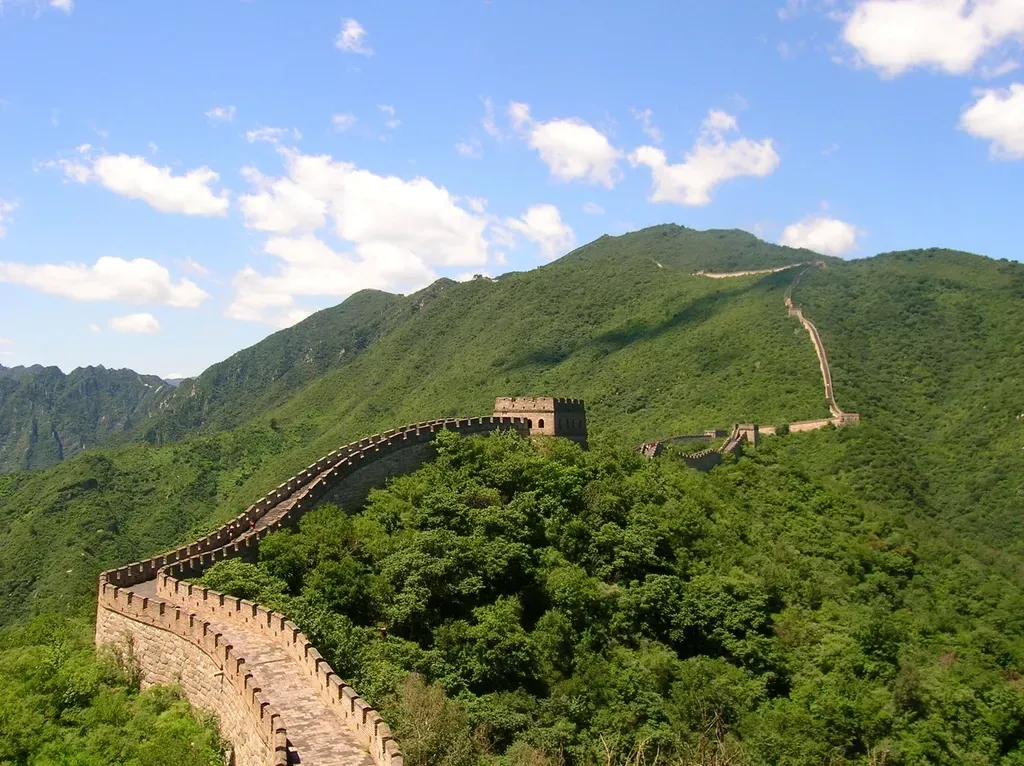
Let’s be real: the Great Wall of China sounds like something someone made up to win an argument. Spanning over 13,000 miles and encompassing various fortifications, watchtowers, and defensive structures, this monumental edifice is one of the most awe-inspiring engineering feats in history. It doesn’t cross flat ground, either. One of the most impressive aspects of the Great Wall’s engineering is its adaptation to challenging landscapes. The wall traverses mountains, deserts, and rugged terrains, posing immense logistical and construction challenges. Engineers utilized advanced surveying techniques to map out the route and employed innovative construction methods to tackle steep inclines and rocky landscapes.
Constructed primarily from stone, brick, and rammed earth, the Great Wall served as a defensive fortification to protect the Chinese empire from nomadic invaders from the north. What astonishes modern engineers isn’t just its length. It’s the fact that sections were built to withstand thousands of years of frost, wind, and earthquake damage without modern binding materials or reinforcement technology. It has stretched across 4,000 miles of hills and mountains in northern China for thousands of years, though much of it was rebuilt in the 14th century AD. The sheer organizational capacity required to build something of this scale, coordinating hundreds of thousands of workers across extreme terrain, rivals anything attempted in modern mega-infrastructure projects.
7. The Roman Aqueducts: Gravity-Powered Precision Engineering
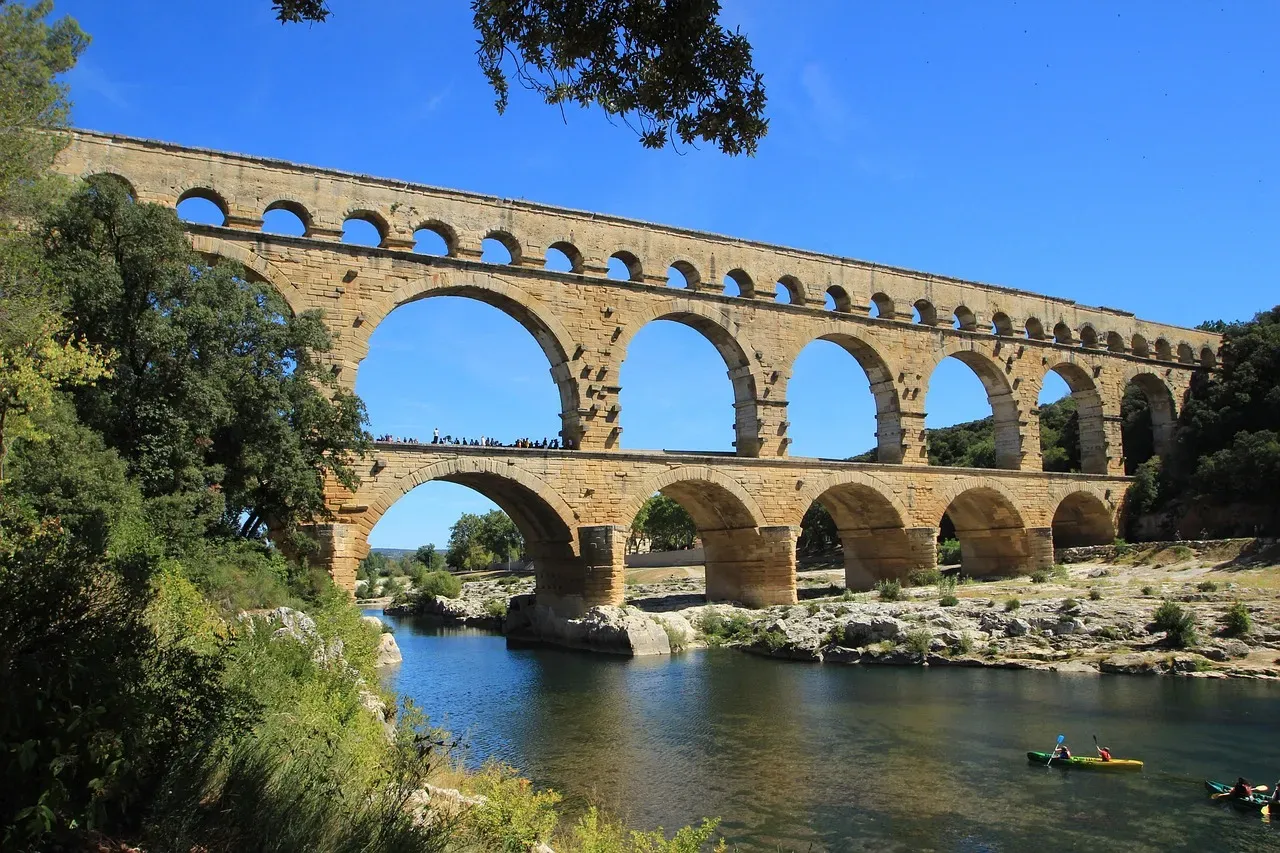
The Roman aqueduct system stands as one of the most impressive feats of engineering from the ancient world. These aqueducts carried fresh water from springs and rivers far outside city boundaries directly into urban centers, supplying fountains, public baths, households, and even lavish gardens. The breathtaking part? Not a single pump. Not a single electric motor. Roman engineers built complex systems of aqueducts to bring fresh water into their growing cities and towns from the surrounding countryside. Relying on gravity only, water flowed from these complex networks of underground pipes, above-ground water lines, and bridges into large holding areas. The water was then distributed to public baths, fountains, and private homes.
To maintain consistent water flow over dozens of kilometers, Roman engineers had to calculate gradients with extraordinary precision, often maintaining a slope of just a few centimeters per hundred meters. A single miscalculation and the whole system failed. Roman concrete, mixed with volcanic ash, seawater, and lime, has lasted millennia. It has remarkably resilient, self-healing properties that modern concrete lacks. The aqueducts weren’t just a plumbing solution. They were a demonstration that ancient engineers could solve complex hydraulic problems at a city-wide scale, a feat that directly inspired modern urban water infrastructure design as we know it today.
8. The Parthenon: Where Mathematics Became Architecture

You’ve seen photographs of the Parthenon and likely thought: impressive, sure, but it’s just columns and a roof. Here’s where things get interesting. When the Athenians fought the Persians in 480 BC, the original version of the Parthenon was destroyed, and it wasn’t rebuilt until about 50 years later in 432 BC. The construction is an impressive feat of engineering because it covers the jagged, rocky terrain at the summit of the Acropolis. Nothing about the site was easy, and nothing about its design was accidental. Every column, every step, every cornice was intentionally made slightly imperfect, curved and tapered in ways the human eye perceives as perfectly straight. It’s an optical illusion engineered in marble at enormous scale.
Structural load principles developed by Egyptians and Greeks help architects balance weight in today’s buildings. The Greeks understood long before modern material science that a perfectly straight column actually looks bowed to the human eye. So they built a slight outward curve, called entasis, into each column to counteract this illusion. Greek engineering balanced beauty, strength, and proportion in a way no subsequent civilization has quite replicated. I think what’s most astonishing is that this wasn’t the result of happy accident but of deliberate, systematic mathematical planning carried out with hand tools and no computer modeling whatsoever.
9. Angkor Wat: A Water Management Marvel Hidden in Plain Sight

Built in the early 12th century, Angkor Wat originally served as a Hindu temple dedicated to Vishnu before gradually transforming into a Buddhist site. The temple’s five central towers symbolize Mount Meru, the center of the universe in Hindu cosmology. But the true engineering genius of Angkor Wat is barely visible to most visitors. The city of Angkor was once the capital of the Khmer empire. Construction of the many temples in this city spanned many centuries. At its peak, it was home to over a million people, making it one of the largest pre-industrial cities on earth. Sustaining that population in a monsoon climate required a hydraulic engineering system of almost inconceivable complexity.
The Khmer engineers designed an elaborate network of reservoirs, canals, and moats that managed monsoon flooding while storing water for the dry season. The scale of this system, some reservoirs stretching several kilometers across, required precise topographic surveying and hydraulic calculations. The world’s largest religious monument complex represents the pinnacle of Khmer architecture and Hindu-Buddhist spiritual traditions. Modern hydrologists studying the site continue to find new layers of engineering sophistication, including sophisticated drainage channels that modern researchers are still mapping with drone technology. It’s a water management system that, had it not fallen into disuse, might have sustained that city for centuries more.
10. The Leshan Giant Buddha: Ancient Drainage Engineering at Monumental Scale
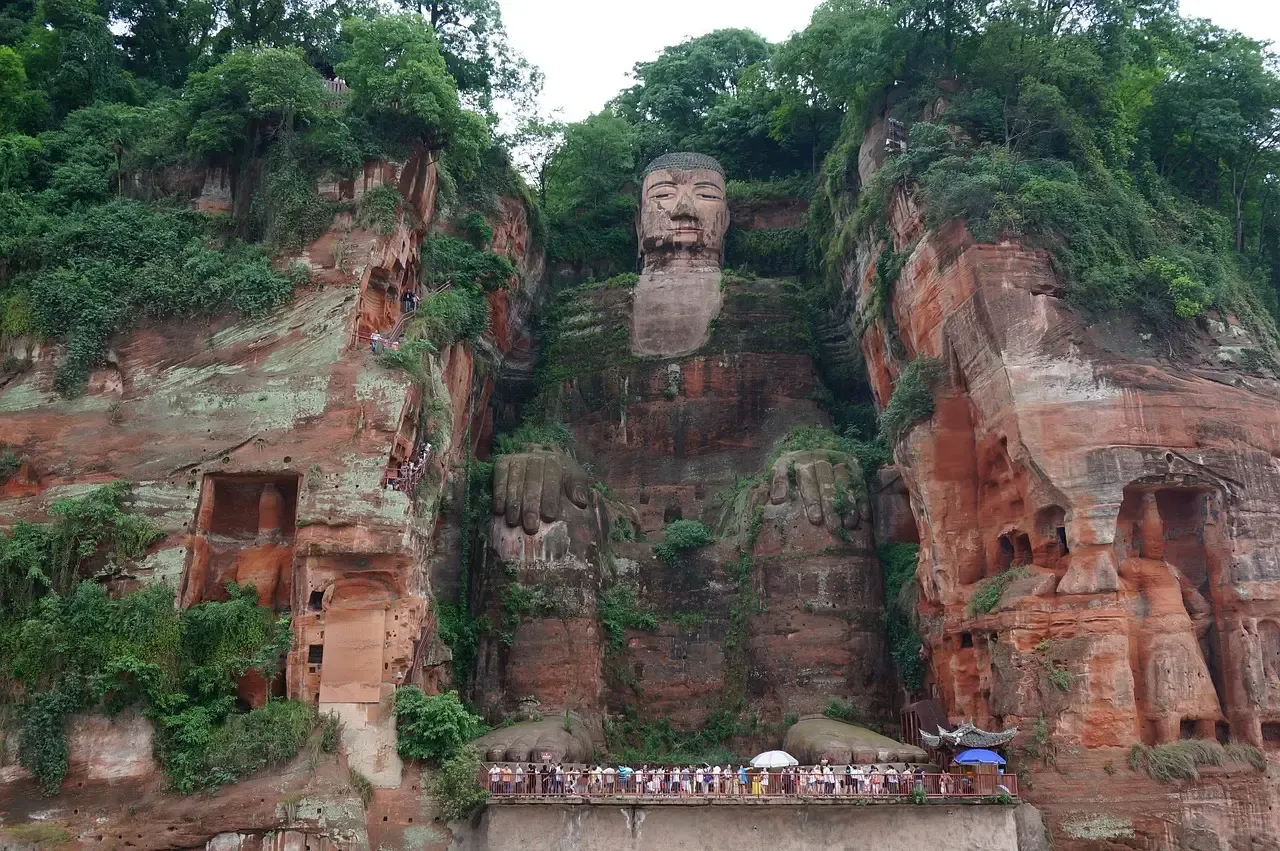
Carved entirely out of stone by monk Hai Tong with the aim of appeasing water spirits thought to be responsible for boat accidents, the Leshan Buddha is by far the largest Buddha statue in the world. It is located east of Leshan City in the Chinese province of Sichuan and sits at the point where the Dadu River, Qingyi River, and Min River converge. Measuring 232 feet tall with 92-foot wide shoulders, this Buddha statue was completed in 803 CE. It’s imposing enough just as a carving. But what genuinely astonishes modern architects is what’s hidden inside it.
The statue features 1,021 intricately coiled buns that have been carefully integrated into its head, acting as a hidden drainage system that allows rainwater to flow to the ground without damaging the statue. The drainage system also runs through other parts of the statue including its ears and arms. The ancient builders designed a fully integrated water management system into a religious monument, camouflaged within the aesthetic elements so perfectly that it went largely unrecognized for centuries. This isn’t just structural engineering. This is systems thinking at an architectural scale, the kind of design philosophy that modern sustainable architects are still trying to emulate when they talk about “passive building systems.” The ancient builders of Leshan were practicing it over 1,200 years ago.
Conclusion: What Ancient Builders Still Teach Us Today
The more you look at these structures, the more you realize something quietly humbling. Contrary to popular belief, some ancient civilizations were highly advanced and capable of spectacular engineering accomplishments. Many of these ancient societies built architectural wonders using construction expertise that has stumped civil engineers and historians until recent years. We have satellites, supercomputers, and carbon-fiber composites. They had copper tools, ramps, and a profound understanding of materials and physics that came from working with the world rather than against it.
We keep looking back because these techniques worked: many ancient structures are still standing. Understanding them gives us perspective. Not all progress needs fancy tools. Sometimes, the simplest method is the smartest. Local materials, smart labor, and deep site understanding go further than tech alone. The ancient world didn’t have less intelligence. It had different intelligence. And judging by what’s still standing after four thousand years, it may have been exactly the right kind.
Perhaps the real lesson from all of this isn’t that ancient engineers were miraculous. It’s that you don’t need everything modern technology offers to build something timeless. You need curiosity, patience, and a ruthless focus on solving the right problem. So the next time you walk past a crumbling modern building that’s barely fifty years old, ask yourself: what would the builders of the Pantheon think? What would you think?