

If you imagine ancient people staring at the night sky in ignorance, think again. Across the world, long before telescopes, satellites, or space probes, humans were tracking the heavens with a precision that still makes modern scientists raise their eyebrows. They carved star maps into stone, encoded planetary cycles into myths, and built gigantic structures that lined up with the sun and stars to the exact day.
What’s wild is not just that they watched the sky, but how much they actually figured out. Using nothing but the naked eye, patience, and a lot of math, they uncovered patterns it takes us software and spreadsheets to verify today. Let’s walk through ten ancient civilizations whose sky-watching skills were so advanced that even in 2026, with all our tech, we’re still trying to understand how they pulled it off.
1. The Sumerians: Mapping the Heavens at the Dawn of History
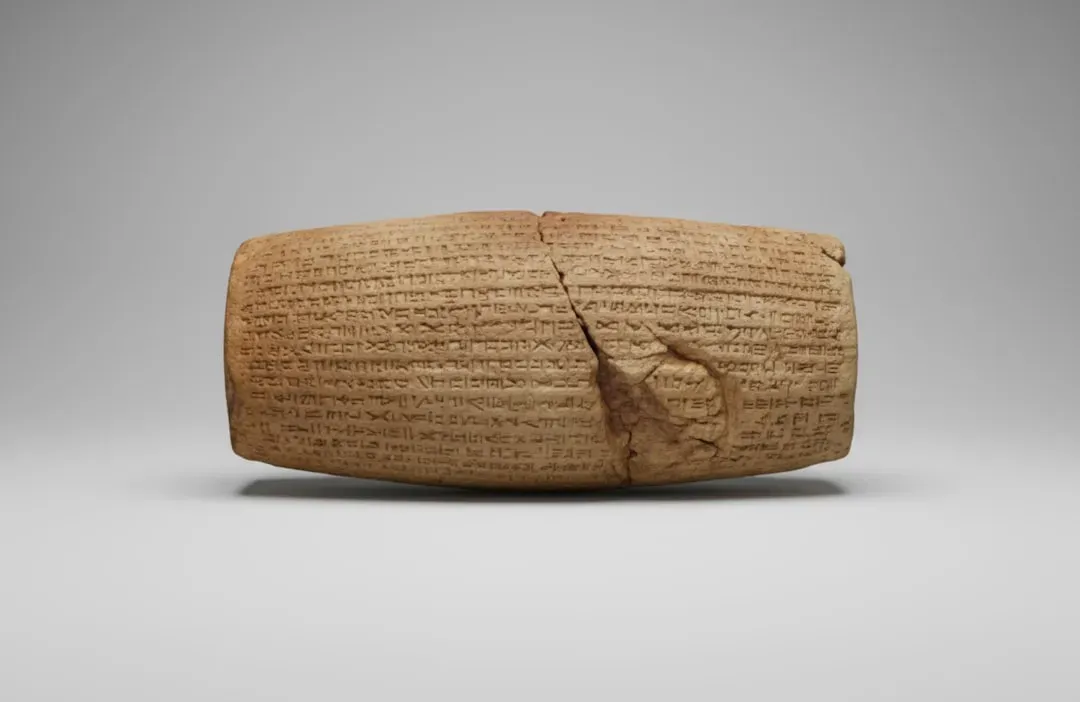
The Sumerians, who flourished in Mesopotamia more than four thousand years ago, were among the first to turn sky-watching into a structured science. They recorded celestial events on clay tablets, tracking the movements of the sun, moon, and visible planets with a patience that stretched over centuries. These early astronomers noticed that certain stars rose just before dawn at key times of the year, and they used that to pin down seasons for agriculture and religious festivals.
They also helped pioneer the sexagesimal, or base‑sixty, number system, which is why we still divide circles into three hundred and sixty degrees and hours into sixty minutes. Their lists of stars and omens blended astronomy with astrology, but the underlying observations were systematic and surprisingly consistent. When modern researchers reconstruct Sumerian sky charts with planetarium software, the alignments often check out, which is a bit like finding out that someone from the Bronze Age guessed your phone’s GPS coordinates and got them mostly right.
2. The Babylonians: Masters of Planetary Cycles and Celestial Prediction
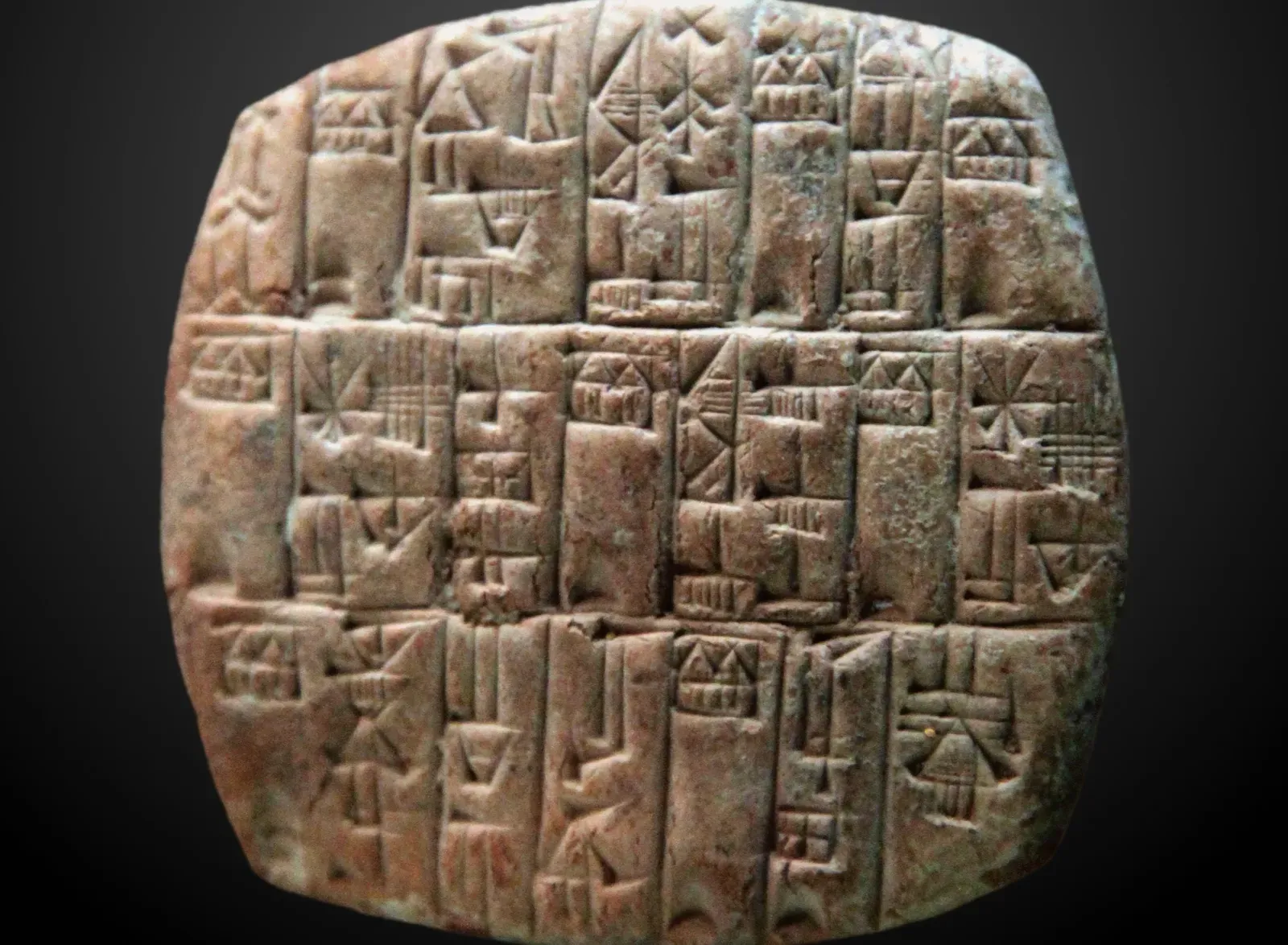
The Babylonians built directly on Sumerian foundations and took sky‑tracking to a higher mathematical level. They developed detailed records of eclipses, planetary positions, and lunar phases over hundreds of years, turning observation into prediction. By recognizing repeating cycles, they were able to anticipate solar and lunar eclipses with a level of accuracy that stuns many historians of science.
They used clever numerical methods, including early forms of what we’d now call step‑wise approximation, to calculate where planets would appear in the sky. Their so‑called “Enūma Anu Enlil” tablets link celestial phenomena to events on Earth, but beneath the omens lies a massive data set of real sky behavior. Modern astronomers have checked some of their recorded eclipses and found they line up with actual historical events in the sky, which turns these ancient texts into one of the earliest long‑term astronomical databases we have.
3. The Ancient Egyptians: Aligning Pyramids and Temples with the Cosmos

Ancient Egypt didn’t just build monuments; it built monuments that pointed at the sky with eerie precision. The Great Pyramid of Giza, for example, is aligned so closely to the cardinal directions that the error is only tiny fractions of a degree, a feat that would challenge a surveyor even today without modern instruments. Many scholars think Egyptian priests used circumpolar stars – those that never set – to fix true north, watching them as they rotated around the celestial pole night after night.
Egyptians also tracked the heliacal rising of Sirius, when the star first becomes visible before sunrise after a period of invisibility. This event coincided closely with the annual Nile flood and became a key marker in their calendar. They effectively linked sky events to seasonal changes on Earth in a way that was both practical and spiritual. Walking through temple complexes such as Karnak, you can see axial alignments that catch sunlight at solstices or significant festival days, turning the entire building into a kind of stone‑and‑light calendar.
4. The Maya: Calendar Geniuses and Planetary Timekeepers

The ancient Maya of Mesoamerica developed some of the most sophisticated calendars of the ancient world, and they did it with careful observation and serious number‑crunching. They tracked the cycles of the sun, the moon, Venus, and other planets, weaving them together into multiple interlocking calendars. One of these, the so‑called Long Count, stretches across thousands of years, showing they thought in cosmic time spans that dwarf a single human lifetime.
Venus held a special place in Maya astronomy, and they monitored its appearances and disappearances with remarkable precision. They noticed that Venus’s cycle repeats in a pattern lasting hundreds of days and used that to schedule rituals and perhaps even wars. The accuracy of their calculations is striking – when modern researchers reconstruct Maya Venus tables, the errors over long periods are surprisingly small. Standing on top of a Maya observatory like El Caracol at Chichén Itzá, you can almost feel how the building is “tuned” to the motions of the sky.
5. The Ancient Greeks: From Mythic Sky Stories to Mathematical Astronomy

The ancient Greeks are often remembered for philosophy, but they were also pivotal in turning sky‑watching into a rigorous, mathematical science. They proposed that celestial phenomena followed laws that could be described with geometry, not just stories about gods and heroes. Thinkers such as Aristarchus argued that the Earth orbits the sun long before this became widely accepted, and others calculated the size of the Earth, the distance to the moon, and even rough scales of the cosmos.
Greek astronomers created star catalogs and developed models to explain planetary retrograde motion, even if their geocentric assumptions later proved wrong. Devices like the Antikythera mechanism – a complex geared instrument recovered from a shipwreck – show just how far they took this. That machine could predict eclipses and model the motions of celestial bodies using a sophisticated interplay of gears, essentially acting like a mechanical computer centuries before such concepts existed. When modern engineers reconstructed it, they were stunned by the craftsmanship and the astronomical insight packed into a corroded lump of bronze.
6. The Chinese: Centuries of Continuous Sky Records and Supernovae

Imperial China maintained one of the longest, most continuous sets of astronomical observations in human history. Court astronomers carefully recorded comets, eclipses, sunspots, and so‑called “guest stars” for well over two millennia. These records weren’t just casual notes; they could have political consequences, because unusual sky events were often interpreted as omens about the emperor’s mandate to rule.
Today, astrophysicists still consult ancient Chinese texts when they study supernova remnants and long‑term solar activity. For example, detailed descriptions of sudden bright stars appearing and fading over months match what we expect from supernovae, and those timelines help modern researchers date and understand distant cosmic explosions. Their meticulous eclipse records also help refine models of subtle changes in Earth’s rotation over long periods. It’s almost surreal to think that something written down with a brush on silk centuries ago can help calibrate cutting‑edge space observatories now.
7. The Indians: Cosmic Cycles and Accurate Planetary Models
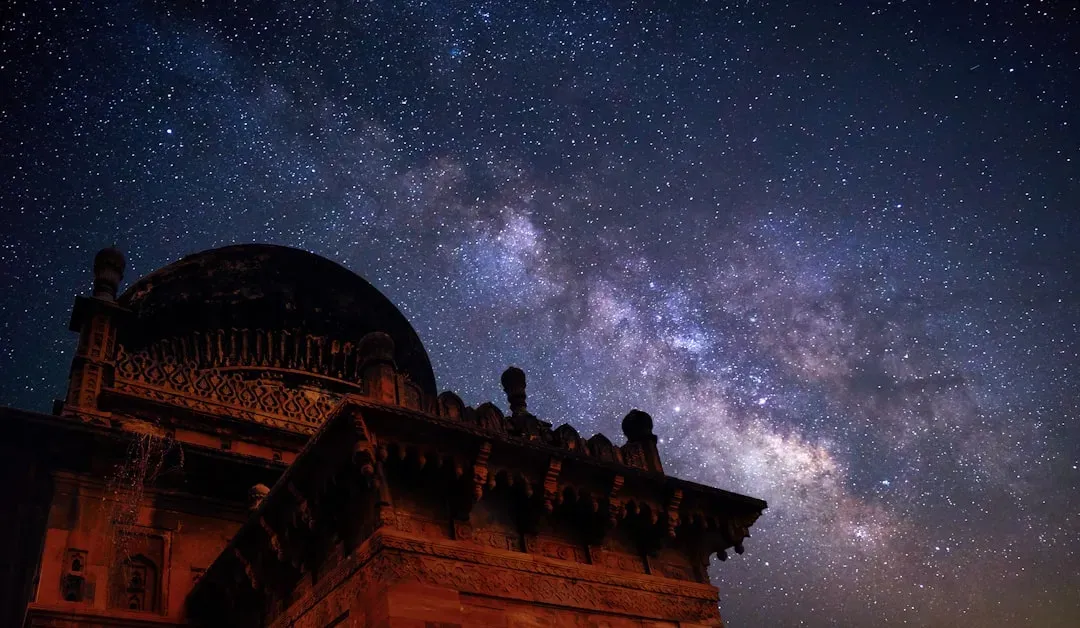
Ancient and classical Indian astronomers developed an intricate understanding of celestial cycles embedded in a broader philosophical and religious framework. Texts on Jyotisha, or astral science, laid out methods for tracking the sun, moon, and planets and predicting eclipses with impressive accuracy. They also recognized extremely long cycles of time, imagining the universe evolving through vast cosmic ages that stretch far beyond human history.
Mathematicians and astronomers in the Indian tradition refined trigonometric functions and used them to calculate planetary positions long before such techniques arrived in Europe. Some of their estimates – such as the length of the solar year – come very close to modern measurements. They also understood that the Earth was spherical and discussed the idea that it might rotate on its axis, which is striking when you remember how many cultures imagined a flat, stationary world. Looked at from 2026, their mix of spiritual storytelling and careful math feels both deeply human and intellectually bold.
8. The Inca and Their Andean Neighbors: Sky‑Aligned Cities in the Clouds

High in the Andes, the Inca and related cultures turned mountains, stones, and shadows into astronomical tools. Sites like Machu Picchu are not just picturesque ruins; they are bristling with alignments that line up with solstices, equinoxes, and important star risings. The famous Intihuatana stone, for example, appears to function as a sort of solar marker, casting key shadows at specific times of the year, almost like a sculpted calendar.
The Inca also paid close attention to the dark patches of the Milky Way, seeing shapes in them and linking them to seasonal cycles, animals, and agricultural tasks. Their capital, Cusco, was said to be connected symbolically and perhaps spatially to a web of shrines and sightlines reaching into the surrounding landscape. When archaeologists survey these networks with modern tools, they find recurring patterns that suggest a deliberate cosmic layout. It feels as if the entire empire was partially mapped onto the sky, turning geography into a kind of mirror of the heavens.
9. The Polynesians: Navigating an Ocean with Stars as Their Compass

While many civilizations watched the sky from settled cities, Polynesian navigators used the night sky as their primary tool for exploring the Pacific – one of the largest stretches of open ocean on Earth. They memorized star paths, learning which stars rose and set at particular bearings and using them like a mental compass. Without metal instruments or written charts, they traveled between islands separated by hundreds or even thousands of kilometers, relying on a mix of star knowledge, ocean swells, and wind patterns.
Modern reconstructions of traditional voyaging, such as the trips of double‑hulled canoes guided only by non‑instrument navigation, have shown how extraordinarily effective this system is. Navigators could sense subtle changes in swell direction at night while tracking the movement of familiar constellations overhead, updating their course in real time. When you stand on a beach in the dark and look up, it’s humbling to realize that someone once used that same sky to cross distances that still feel intimidating even in a modern boat with GPS.
10. The Nabataeans and Other Desert Sky‑Watchers: Stone, Stars, and Sacred Horizons

The Nabataeans, best known for the rock‑cut city of Petra in modern‑day Jordan, also show evidence of sharp astronomical awareness. Researchers have found that some of Petra’s monuments and tombs are aligned with key solar events, such as solstices and equinoxes, so that sunlight illuminates specific interiors or facades on particular days. In a harsh desert environment, knowing exactly when seasons were changing could be a matter of survival, and the sky was a reliable, if subtle, signal.
Across the wider Near East and Arabian deserts, similar alignments and standing stones suggest a broader tradition of using the horizon and stars as reference points. When you see a shaft of light hit the back wall of a chamber only on one specific morning of the year, it’s hard not to feel that mix of engineering and awe. Modern archaeologists, armed with drone surveys and computer simulations of ancient skies, are still uncovering new alignments and patterns. The more they look, the clearer it becomes that for these desert cultures, the line between astronomy, architecture, and spirituality was almost non‑existent.
A Shared Human Sky – and Unfinished Questions
Across continents and millennia, these civilizations prove that curiosity about the sky is one of the most persistent human traits. They tracked planets without telescopes, tied architecture to solstices without lasers, and built calendars that ran for thousands of years while we sometimes forget what day it is without our phones. Each culture wrapped its astronomy in its own myths and meanings, but underneath those stories lay serious observation, careful record‑keeping, and surprisingly advanced math.
In 2026, with space telescopes peering at exoplanets and probes flying past distant worlds, it’s easy to feel superior – but in many ways we’re still walking in their footsteps. We inherit their questions as much as their answers: How does the universe work, and what does it mean to live under this vast, glittering ceiling? The next time you look up at the night sky, it’s worth remembering just how many ancient eyes have studied those same stars, trying to make sense of them with the tools they had. Which of their discoveries did you find most surprising?