
Every time you look up at the night sky, you’re peering through the same window that ancient observers have gazed through for thousands of years. Long before telescopes, satellites, or computational models, people armed with nothing but sharp minds and patient eyes were charting the heavens with a precision that still surprises researchers today.
What’s remarkable isn’t simply that they looked up, it’s that so many of what they recorded turned out to be conceptually correct. Some of their observations wouldn’t be fully explained or appreciated for more than two millennia. These are ten of the most striking examples where ancient sky-watching quietly laid the foundation for modern discoveries.
1. Babylonian Eclipse Prediction and the Saros Cycle
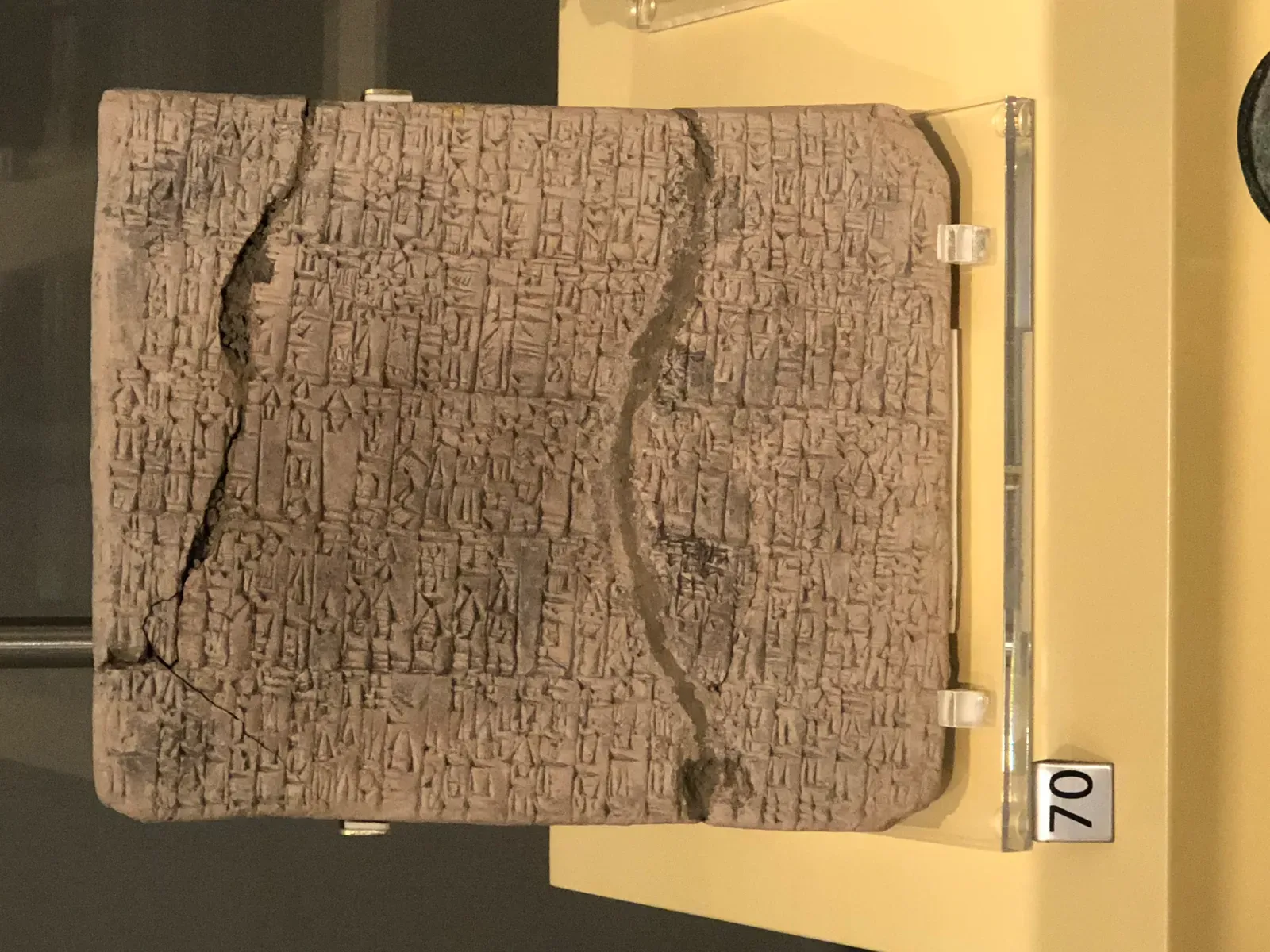
If you ever wondered who first figured out how to predict eclipses, the answer lies in ancient Mesopotamia. The Babylonians identified the Saros cycle, an 18-year pattern that predicts lunar and solar eclipses, and developed tables to calculate planetary positions. This wasn’t guesswork. It was the product of centuries of careful, disciplined record-keeping on clay tablets.
Using these data, Babylonian astronomers were able to predict lunar eclipses and later solar eclipses with fair accuracy. Their tool was the Saros cycle, a period of 223 synodic months, or 18 years and 11.3 days, after which lunar and solar eclipses repeat themselves. For example, knowing that a solar eclipse occurred on 18 May 603 BCE allowed them to anticipate a nearly identical eclipse on 28 May 585 BCE. Modern eclipse prediction programs still operate on precisely this mathematical foundation.
2. The Babylonian Mapping of Jupiter Using Geometric Methods
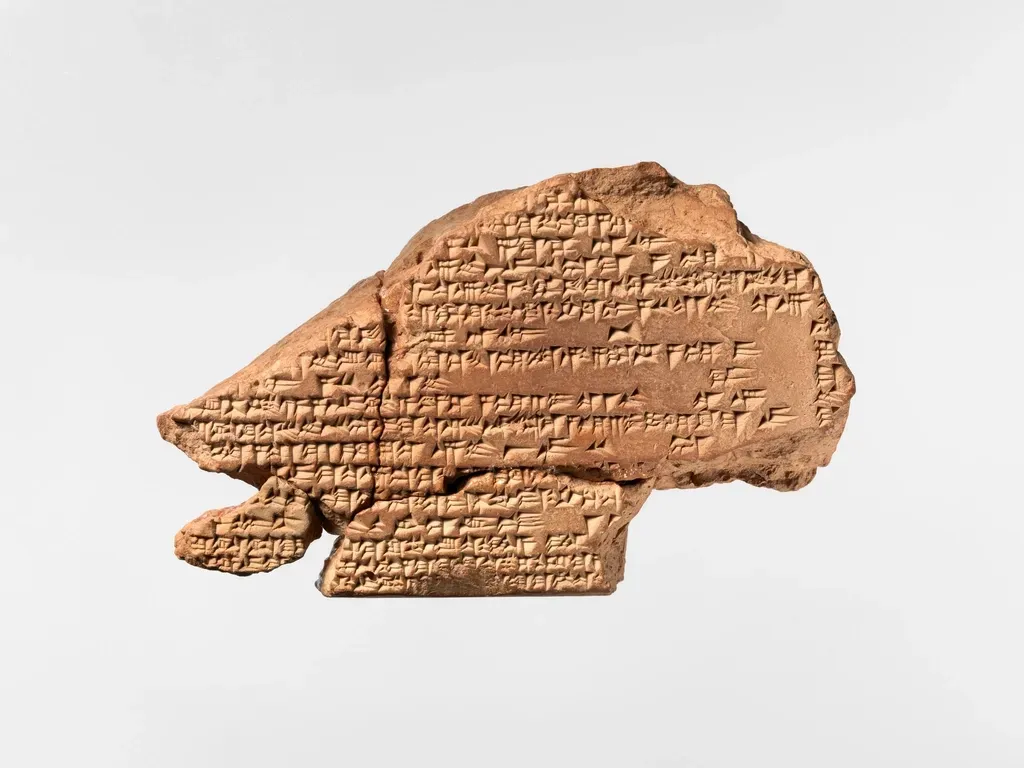
You might assume that graphing a planet’s velocity on a coordinate axis was a Renaissance invention, but you’d be wrong. According to a translated cuneiform tablet, ancient Babylonian astronomers were the first to use surprisingly modern methods to track the path of Jupiter. The approach involved plotting time on one axis and the daily shift in Jupiter’s position on the other, producing a trapezoid-shaped figure whose area represented the planet’s total displacement.
It’s a technique that historians previously thought no one came up with until medieval Europe, and it’s a staple of modern astronomy, physics, and math. Analysis of previously unpublished cuneiform tablets in the British Museum, dated between 350 and 50 BC, demonstrates that Babylonian astronomers sometimes used geometrical methods, prefiguring the methods of the Oxford Calculators, to describe the motion of Jupiter. The implication is staggering: abstract mathematical physics may have roots far older than previously assumed.
3. Hipparchus and the Precession of the Equinoxes
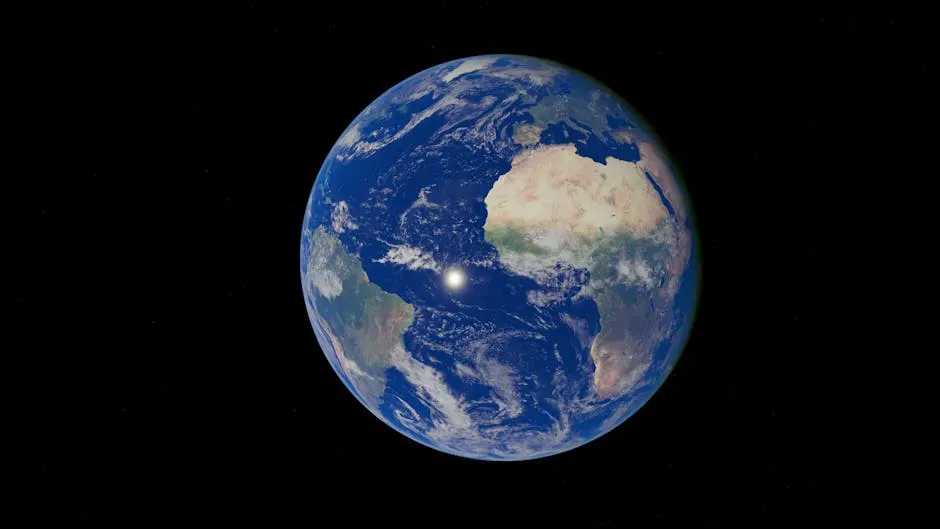
When you learn that Earth wobbles on its axis over a cycle of roughly 26,000 years, you might be surprised to know that someone detected this motion with nothing more than naked-eye observations in the second century BCE. Hipparchus is considered the founder of trigonometry, but is most famous for his incidental discovery of the precession of the equinoxes. He noticed that star positions had shifted when compared to records from earlier observers, and correctly concluded that something systematic was happening.
In modern astronomy, this shift is called the precession of the equinoxes and is known to be caused by a slow wobble in the orientation of Earth’s axis. The spot to which the north pole points in the sky describes a circle in a period of more than twenty-six thousand years. This precession is so slow that it is not noticeable in a person’s lifetime, though astronomers must consider its effect when studying ancient sites such as Stonehenge. Hipparchus didn’t know the cause, but his identification of the phenomenon itself was accurate and enduring.
4. Eratosthenes Calculating the Size of the Earth
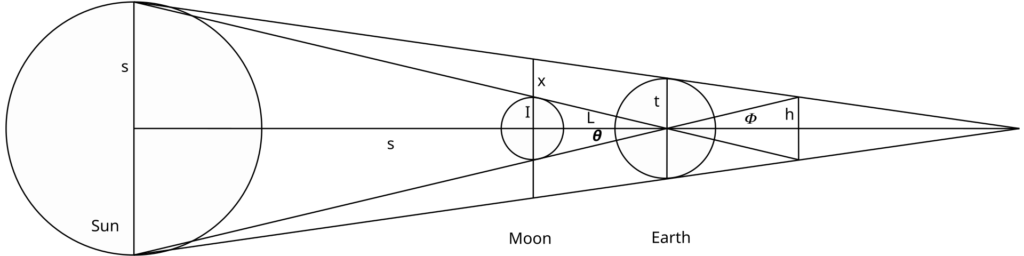
You can calculate the circumference of Earth without a satellite, a rocket, or even a map. Eratosthenes proved this around 240 BCE with two sticks, two cities, and a shadow. His initial idea was based on his observation that the sun is directly overhead at noon in Cyrene in southern Egypt on the first day of summer. Postulating that the Earth was a sphere, he correctly reasoned that if he could determine the altitude of the noon sun at another location and knew the distance between the two points, he could compute the circumference of the Earth.
Eratosthenes’ original calculation resulted in a circumference of approximately 224,100 stadia, which, based on the use of the Pan-Hellenic stade of 180 meters, is equivalent to about 40,338 kilometers, with a margin of error of less than one percent. An approximation extremely close to modern-day measurements. What he accomplished with geometry and a clear head is genuinely one of the most elegant feats of reasoning in scientific history.
5. Chinese Astronomers Recording the Supernova of 1054
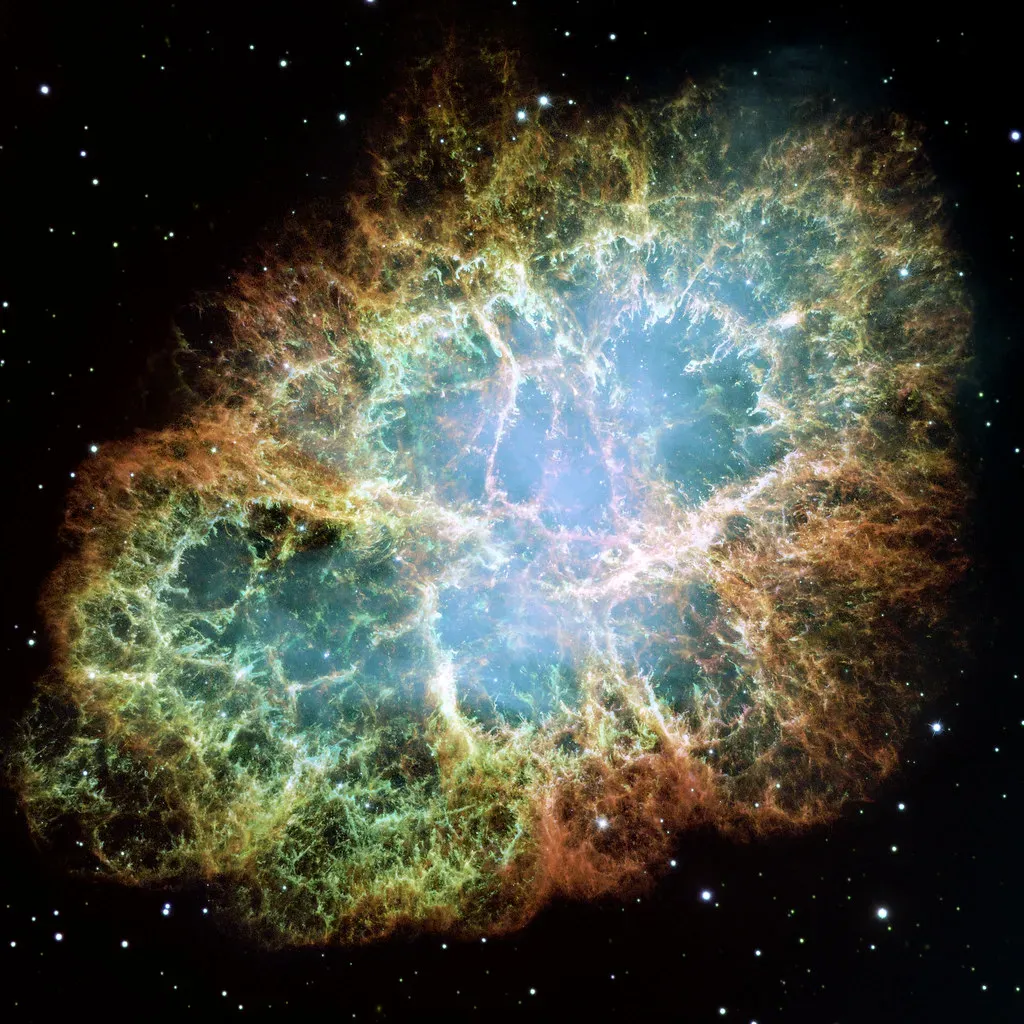
In the summer of 1054, something extraordinary blazed into the sky. In July of the year 1054 CE, a massive star in the constellation Taurus ended its life in a cataclysmic explosion. The resulting supernova, now known as SN 1054, shone brighter than Venus and remained visible in broad daylight for nearly a month. It left behind the Crab Nebula and a rapidly spinning neutron star, the Crab Pulsar, which continue to expand and emit across the electromagnetic spectrum to this day.
The most detailed and scientifically useful records come from the Song Dynasty in China, whose court astronomers maintained rigorous celestial logs. On July 4th, 1054, imperial scribes recorded the appearance of a “guest star” near the southern horn of the constellation they identified as part of the White Tiger, a position corresponding to the constellation Taurus in Western terms. The star, they noted, was “visible in daylight, like Venus” and remained so for 23 days, a remarkably precise and verifiable detail. Without those records, modern astronomers would have struggled to connect the Crab Nebula to a specific historical event.
6. The Babylonian Venus Tablet and Planetary Theory
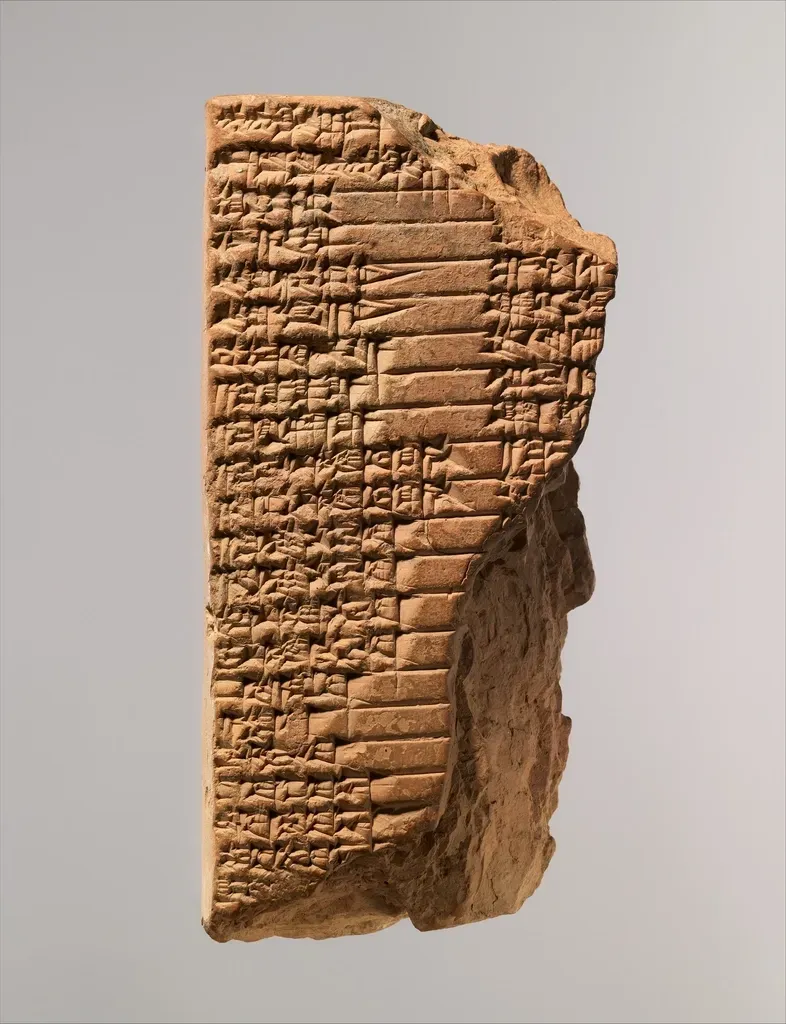
You’re looking at one of the oldest pieces of observational science in human history when you examine the Babylonian Venus Tablet of Ammisaduqa. The Babylonians were the first civilization known to possess a functional theory of the planets. The oldest surviving planetary astronomical text is the Babylonian Venus tablet of Ammisaduqa, a 7th-century BC copy of a list of observations of the motions of the planet Venus that probably dates as early as the second millennium BC.
Dating back to 1800 BC, the Babylonians were among the first civilizations to document the movements of the sun and the moon. They maintained very detailed records of these motions, including daily, monthly, and yearly positions of celestial bodies. This information was initially of mystical value, used to warn the king about possible catastrophic events. Over time, that record-keeping morphed into something much closer to what we’d recognize as planetary science, tracking Venus’s cycles with enough regularity that they could anticipate its appearances and disappearances in the sky.
7. Aristarchus Proposing a Heliocentric Universe
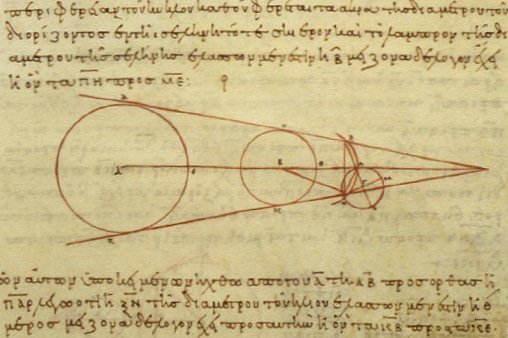
Copernicus is celebrated for placing the Sun at the center of the solar system, but you should also know that someone beat him to the idea by roughly eighteen centuries. Aristarchus of Samos proposed heliocentrism as an alternative to the Earth-centered universe. His heliocentric model places the Sun at its center, with Earth as just one planet orbiting it. However, there were only a few people who took the theory seriously.
In astronomy, the rediscovery of Ptolemy’s original texts would eventually lead Polish astronomer Nicolaus Copernicus to revolutionise the view of the cosmos, with the shocking revelation that Earth is not the centre of the Universe. Copernicus published his theory of a heliocentric system in 1543, identifying the Sun as the centre of the Universe, with the Earth and the other planets bound to move around it. The idea was dormant for nearly two millennia before it was revived, tested, and confirmed. Aristarchus was simply too far ahead of his time.
8. The Mayan Dresden Codex and Venus Cycle Predictions

If you’ve ever underestimated the Mayan astronomers, the Dresden Codex will change your mind. The Mayans built sophisticated observatories, such as the El Caracol at Chichen Itza, to accurately observe celestial bodies. These observatories were architecturally aligned with the movements of the sun, moon, Venus, and other planets. Their astronomical observations were recorded in codices, folding books written on bark paper.
Though many were destroyed during the Spanish conquest, some, like the Dresden Codex, survived. It contains detailed tables for predicting solar and lunar eclipses and the cycles of Venus and Mars. It’s also famous for its Venus Table, remarkably accurate in predicting this planet’s appearances and disappearances. The Mayan understanding of Venus’s synodic cycle, the roughly 584-day period from one appearance to the next, was so precise that their margin of error over centuries of observation was extraordinarily small.
9. Hipparchus Cataloguing Stars and Hinting at Stellar Motion

You wouldn’t normally expect a star catalog to anticipate one of the core revelations of modern astrophysics, but Hipparchus managed exactly that. Hipparchus discovered the precession of the equinoxes and observed the appearance of a new star. He suspected stars might move slowly with respect to one another over great lengths of time and he hoped people living in the future could verify this. To this end he compiled a star catalog documenting the positions and magnitudes of over 850 stars.
His legacy bore fruit almost two millennia later when, in 1718, Edmund Halley discovered the proper motion of stars. Halley did this by comparing his own observations with Hipparchus’s catalog and noticing that several bright stars had shifted. Hipparchus also created the magnitude system for describing the brightness of stars, which is still in use today. That magnitude system, devised with the naked eye alone, remains the foundational framework astronomers use to classify stellar brightness in the modern era.
10. The Antikythera Mechanism and the Prediction of Celestial Cycles
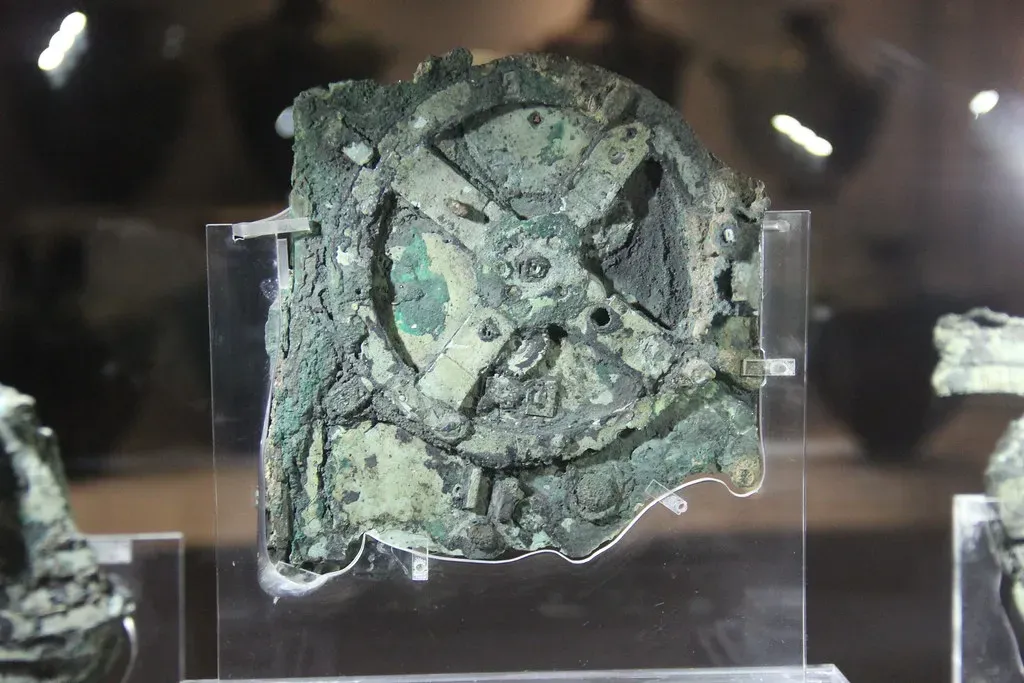
If you wanted to build a computer that could track the position of the Sun, Moon, and planets, and predict eclipses across decades, you might assume that requires sophisticated modern engineering. The ancient Greeks apparently disagreed. The Antikythera mechanism, an ancient Greek astronomical observational device for calculating the movements of the Sun and the Moon, possibly the planets, dates from about 150 to 100 BC, and was the first ancestor of an astronomical computer. It was discovered in an ancient shipwreck off the Greek island of Antikythera, between Kythera and Crete.
The device relies on Babylonian and Egyptian astronomical principles and uses various astronomical cycles with the span of 19 years to calculate the position of the Sun, Moon, and planets. It synthesized centuries of accumulated observational knowledge into a single portable instrument. The sophistication of its internal gearing was not matched by any other known mechanism for over a thousand years, and it fundamentally changed how historians understand the technological capability of the ancient world.
Conclusion
What ties all ten of these observations together is something simple but profound. Modern astronomy is part of a continuous tradition, now almost 4,000 years long, that cuts across multiple cultures and languages. The people who gazed at Venus tablets, mapped the Crab Nebula’s progenitor star, and built gear-driven models of the solar system weren’t primitive forerunners. They were working scientists in every meaningful sense of the word.
Ancient astronomical records of phenomena like supernovae and comets are sometimes used in modern astronomical studies. The value runs deeper than nostalgia. Those records, inscribed in clay, painted in codices, and carved into stone, fill genuine gaps in the data sets that contemporary researchers still depend on. The further back the observational record extends, the more precisely we can model the universe’s behavior over time.
In the end, the most striking thing about ancient astronomy isn’t how much they got wrong. It’s how much they got right, and how long it took us to catch up with them.